Word Explanation
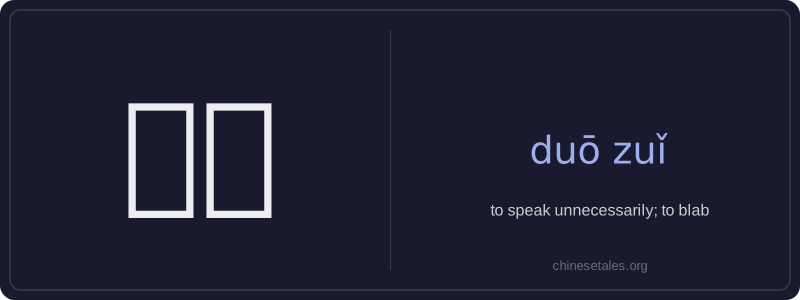
多嘴 literally means 'many mouth' — combining 多 (duō, 'many' or 'excessive') and 嘴 (zuǐ, 'mouth'). It describes the act of speaking too much, especially when it’s unnecessary, untimely, or inappropriate — such as interrupting, revealing secrets, or commenting where one shouldn’t. It carries a mild negative connotation, suggesting impoliteness, lack of discretion, or immaturity.
This word is commonly used in everyday spoken Chinese to scold or tease someone — often a child, a colleague, or a friend — for blurting out information or interfering in others’ affairs. While not harsh like 'gossip' or 'slander', 多嘴 implies poor judgment about when and what to say. It’s frequently used in imperative or admonishing contexts ('别多嘴!' — 'Don’t blab!'), and rarely appears in formal writing.
Example Sentences
Related Words
背后
背后 literally means 'back + behind' and functions
见面
见面 literally means 'see face' — combining 见 (t
面条
‘面条’ (miàn tiáo) literally means ‘flour str
我的
我的 (wǒ de) is a possessive pronoun meaning 'my'
中学
'Zhōngxué' literally combines 'zhōng' (middle)
后来
Later (hòulái) is an adverb meaning 'afterwards'
在家
'Zài jiā' literally combines the preposition 'z
不对
不对 (bù duì) literally combines 不 (bù), meani