Word Explanation
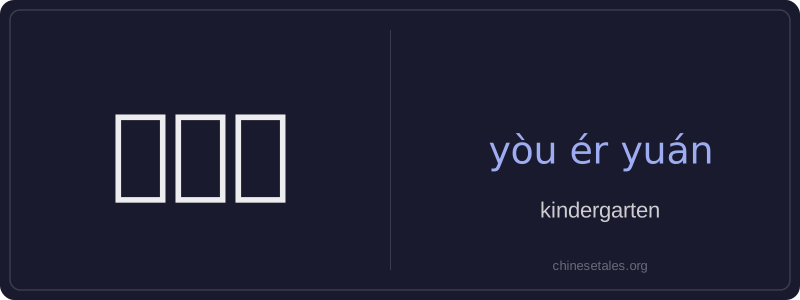
幼儿园 (yòu ér yuán) literally means 'young-child garden' — a compound noun where 幼 (yòu) means 'young' or 'immature', 儿 (ér) means 'child', and 园 (yuán) means 'garden' or 'institution'. In modern usage, it refers specifically to formal early childhood education institutions in China and other Chinese-speaking regions, typically serving children aged three to six before primary school. It is not merely a daycare but emphasizes structured learning, social development, and foundational skills like language, music, art, and basic numeracy.
The term carries warm, nurturing connotations and is widely used in daily conversation, official documents, and media. Parents often discuss enrollment, curriculum, teachers (called 幼儿园老师 yòu ér yuán lǎo shī), and routines such as drop-off and pick-up. While some private or international kindergartens may use English names, 幼儿园 remains the standard, universally understood term across mainland China, Taiwan, and overseas communities.
Example Sentences
Related Words
背后
背后 literally means 'back + behind' and functions
见面
见面 literally means 'see face' — combining 见 (t
面条
‘面条’ (miàn tiáo) literally means ‘flour str
我的
我的 (wǒ de) is a possessive pronoun meaning 'my'
中学
'Zhōngxué' literally combines 'zhōng' (middle)
后来
Later (hòulái) is an adverb meaning 'afterwards'
在家
'Zài jiā' literally combines the preposition 'z
不对
不对 (bù duì) literally combines 不 (bù), meani