Word Explanation
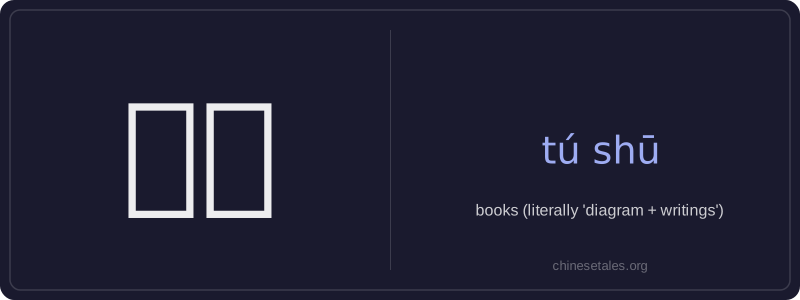
图书 literally means 'diagram' (图) + 'writings' (书), and together it refers to books as physical or digital materials containing knowledge, stories, or information. While the individual characters suggest visual and textual content, in modern usage 图书 almost always appears in formal or institutional contexts—especially in compound words like 图书馆 (library) or 图书管理 (book management). It is more formal and collective than the everyday word 书 (shū), which can mean a single book or books in general.
This term emphasizes the cultural, educational, or archival function of books—not just reading material but resources for learning and preservation. You’ll commonly encounter it in official settings: library catalogs, academic publishing, government education policies, or digital platforms organizing reading content. Unlike 书, 图书 rarely stands alone in casual speech; it’s typically part of a larger phrase or used in written registers such as signage, forms, or reports.
Example Sentences
Related Words
背后
背后 literally means 'back + behind' and functions
见面
见面 literally means 'see face' — combining 见 (t
面条
‘面条’ (miàn tiáo) literally means ‘flour str
我的
我的 (wǒ de) is a possessive pronoun meaning 'my'
中学
'Zhōngxué' literally combines 'zhōng' (middle)
后来
Later (hòulái) is an adverb meaning 'afterwards'
在家
'Zài jiā' literally combines the preposition 'z
不对
不对 (bù duì) literally combines 不 (bù), meani