Word Explanation
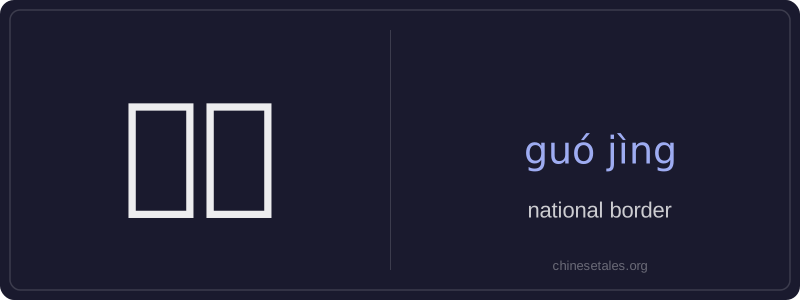
‘国境’ literally means ‘nation’s boundary’ — ‘国’ (guó) means ‘country’ or ‘state’, and ‘境’ (jìng) means ‘border’, ‘boundary’, or ‘territory’. Together, they form a formal noun referring specifically to the internationally recognized line that separates one sovereign country from another. It emphasizes legal and geopolitical demarcation, not just physical geography.
This term is commonly used in official, administrative, and travel-related contexts — for example, when discussing immigration control, customs inspections, cross-border transport, or national sovereignty. It appears frequently in news reports, government documents, and travel advisories. While ‘边境’ (biān jìng) also means ‘border’, it usually refers to the frontier region near the boundary (often within one’s own country), whereas ‘国境’ focuses on the precise dividing line between two nations.
Example Sentences
Related Words
背后
背后 literally means 'back + behind' and functions
见面
见面 literally means 'see face' — combining 见 (t
面条
‘面条’ (miàn tiáo) literally means ‘flour str
我的
我的 (wǒ de) is a possessive pronoun meaning 'my'
中学
'Zhōngxué' literally combines 'zhōng' (middle)
后来
Later (hòulái) is an adverb meaning 'afterwards'
在家
'Zài jiā' literally combines the preposition 'z
不对
不对 (bù duì) literally combines 不 (bù), meani