Word Explanation
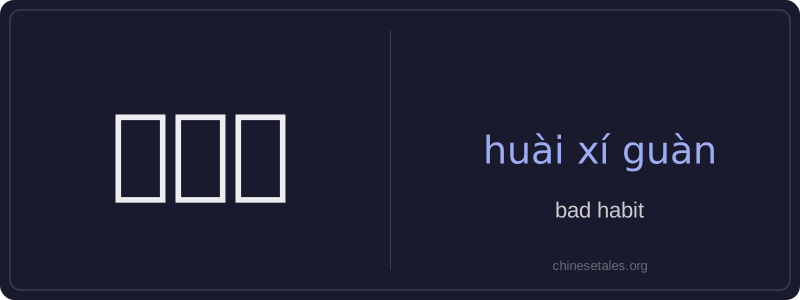
'Bad habit' refers to a repeated behavior that is harmful, unproductive, or socially undesirable—such as nail-biting, procrastination, or excessive screen time. The word combines three characters: 坏 (huài) meaning 'bad' or 'harmful', 习 (xí) meaning 'to practice' or 'to become accustomed to', and 惯 (guàn) meaning 'habit' or 'custom'. Together, they literally suggest something one has practiced so often it has become ingrained—and negatively so.
This term is commonly used in everyday conversation, health education, parenting, and self-improvement contexts. It carries a neutral-to-mildly critical tone—not harsh like 'vice' but more descriptive than judgmental. People often pair it with verbs like 改掉 (gǎi diào, 'to get rid of'), 克服 (kèfú, 'to overcome'), or 养成 (yǎng chéng, 'to develop'—used ironically for the opposite, e.g., 'don’t develop bad habits'). It’s rarely used in formal writing without context, and almost never in isolation—it usually appears with modifiers or verbs indicating change or consequence.
Example Sentences
Related Words
背后
背后 literally means 'back + behind' and functions
中学
'Zhōngxué' literally combines 'zhōng' (middle)
见面
见面 literally means 'see face' — combining 见 (t
面条
‘面条’ (miàn tiáo) literally means ‘flour str
我的
我的 (wǒ de) is a possessive pronoun meaning 'my'
不对
不对 (bù duì) literally combines 不 (bù), meani
后来
Later (hòulái) is an adverb meaning 'afterwards'
在家
'Zài jiā' literally combines the preposition 'z