Word Explanation
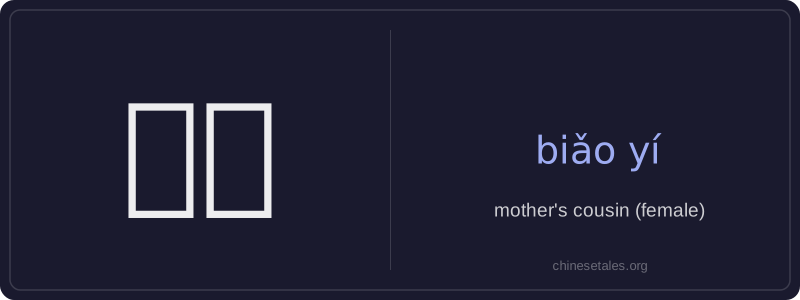
‘表姨’ is a kinship term referring specifically to a female cousin of one’s mother — that is, the sister of one’s maternal aunt (mother’s sister) or the cousin of one’s mother who is female. The first character ‘表’ (biǎo) indicates a ‘collateral’ or ‘maternal-side’ relationship, distinguishing it from ‘堂’ (táng), which refers to paternal-side relatives. The second character ‘姨’ (yí) means ‘aunt’ and typically refers to the sister of one’s mother. Together, ‘表姨’ precisely identifies a woman on the mother’s side who is not a direct aunt but shares the same generation and maternal lineage.
This term is used in formal family introductions, genealogical discussions, or when specifying relationships in conversations about relatives. It reflects Chinese culture’s emphasis on precise kinship terminology, where even distant cousins are distinguished by generation, gender, and lineage (paternal vs. maternal). Unlike English, which often uses ‘cousin’ broadly, Chinese requires specific terms like ‘表姨’ to convey exact familial positioning — making accuracy essential in both speech and writing.
Example Sentences
Related Words
背后
背后 literally means 'back + behind' and functions
中学
'Zhōngxué' literally combines 'zhōng' (middle)
见面
见面 literally means 'see face' — combining 见 (t
面条
‘面条’ (miàn tiáo) literally means ‘flour str
我的
我的 (wǒ de) is a possessive pronoun meaning 'my'
不对
不对 (bù duì) literally combines 不 (bù), meani
后来
Later (hòulái) is an adverb meaning 'afterwards'
在家
'Zài jiā' literally combines the preposition 'z