Word Explanation
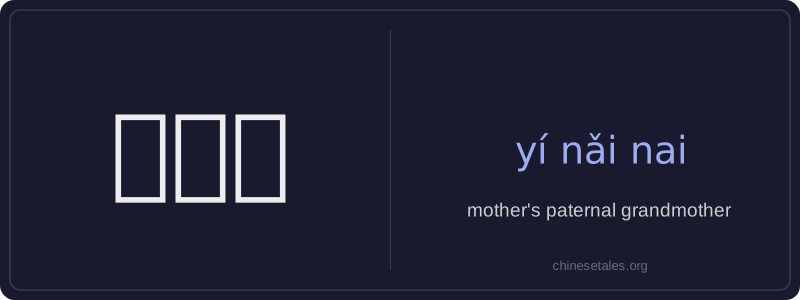
‘姨奶奶’ (yí nǎi nai) is a kinship term referring specifically to one’s mother’s paternal grandmother — that is, the mother of one’s maternal grandfather. It combines three characters: 姨 (yí), which often signals a maternal-side relative (though here it functions as a prefix modifying the following term), and 奶奶 (nǎi nai), the standard term for ‘grandmother’ when used in kinship compounds. Unlike the more common 奶奶 (maternal or paternal grandmother depending on context), 姨奶奶 is highly specific and unambiguous: it always denotes the grandmother on the mother’s father’s side.
This term is used primarily in formal family introductions, genealogical discussions, or when distinguishing among multiple grandmothers in extended families — especially in northern and central China. It reflects Chinese kinship’s precision in specifying lineage, generation, and gender. While rarely used in casual daily speech (people often say ‘妈妈的爷爷的妈妈’ for clarity or use descriptive phrases), it appears in official documents, family trees, and respectful address within close-knit families.
Example Sentences
Related Words
背后
背后 literally means 'back + behind' and functions
中学
'Zhōngxué' literally combines 'zhōng' (middle)
见面
见面 literally means 'see face' — combining 见 (t
面条
‘面条’ (miàn tiáo) literally means ‘flour str
我的
我的 (wǒ de) is a possessive pronoun meaning 'my'
不对
不对 (bù duì) literally combines 不 (bù), meani
后来
Later (hòulái) is an adverb meaning 'afterwards'
在家
'Zài jiā' literally combines the preposition 'z