Word Explanation
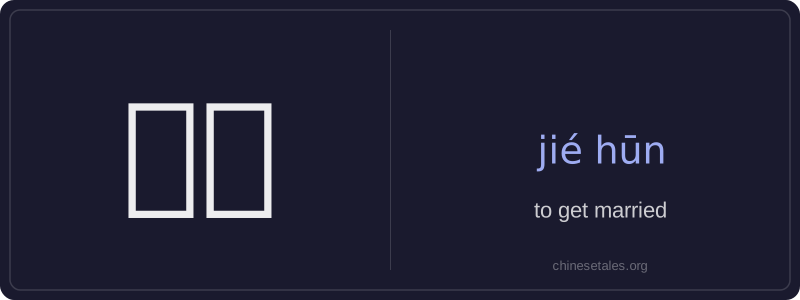
'Jié hūn' literally combines 'jié' (to tie, bind, or join) and 'hūn' (marriage, wedding), evoking the traditional image of two people being bound together in union. It is the standard, neutral verb for 'to get married' in Modern Standard Chinese and applies to both civil and ceremonial marriage. Unlike some English expressions, it does not specify gender, religion, or legal status unless context clarifies it.
This verb is commonly used in present, past, and future tenses with aspect particles like 'le' (for completed action), 'guò' (for experience), or 'yào'/'huì' (for intention or prediction). It appears frequently in personal conversations, news reports about celebrities or public figures, and official documents such as marriage registration forms. While 'jié hūn' is formal enough for writing, it remains natural in everyday speech — unlike more literary alternatives like 'chéng qīn' or archaic terms.
Example Sentences
Related Words
背后
背后 literally means 'back + behind' and functions
中学
'Zhōngxué' literally combines 'zhōng' (middle)
见面
见面 literally means 'see face' — combining 见 (t
面条
‘面条’ (miàn tiáo) literally means ‘flour str
我的
我的 (wǒ de) is a possessive pronoun meaning 'my'
不对
不对 (bù duì) literally combines 不 (bù), meani
后来
Later (hòulái) is an adverb meaning 'afterwards'
在家
'Zài jiā' literally combines the preposition 'z