Word Explanation
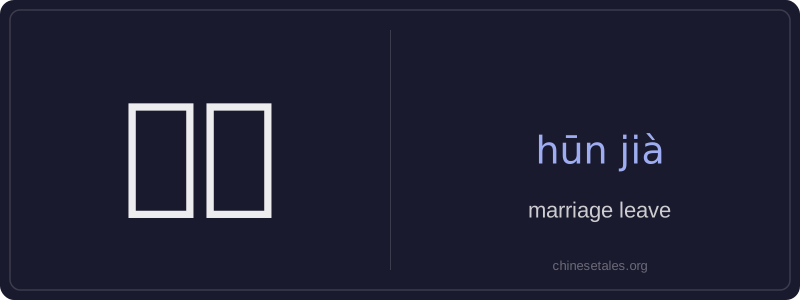
'Hūn jià' literally combines 婚 (hūn), meaning 'marriage', and 假 (jià), meaning 'leave' or 'holiday'. Together, it refers to the paid time off granted by employers in China to employees who are getting married. This is a legally mandated benefit under Chinese labor law, typically lasting three days for standard marriages, though some regions or employers may offer longer periods—especially for late marriages (after age 25 for men or 23 for women), where extra days may apply.
The term is formal and workplace-specific; it’s not used casually among friends or in informal conversation. Unlike general vacation days (年假 nián jià), 婚假 is a one-time entitlement tied specifically to the employee’s own marriage ceremony—not for attending others’ weddings. It must usually be taken within a certain period after the marriage registration date, and proof (e.g., marriage certificate) is required to apply.
Example Sentences
Related Words
背后
背后 literally means 'back + behind' and functions
中学
'Zhōngxué' literally combines 'zhōng' (middle)
见面
见面 literally means 'see face' — combining 见 (t
面条
‘面条’ (miàn tiáo) literally means ‘flour str
我的
我的 (wǒ de) is a possessive pronoun meaning 'my'
不对
不对 (bù duì) literally combines 不 (bù), meani
后来
Later (hòulái) is an adverb meaning 'afterwards'
在家
'Zài jiā' literally combines the preposition 'z