Word Explanation
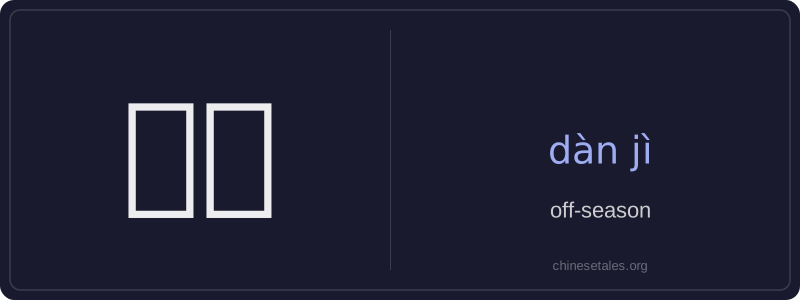
淡季 literally means 'light season' — 淡 (dàn) conveys 'light', 'weak', or 'low intensity', while 季 (jì) means 'season'. Together, they form a compound noun meaning 'off-season': the period when activity, demand, or business is low, especially in tourism, retail, or transportation. It contrasts directly with 旺季 (wàn jì), or 'peak season'.
This term is widely used in commercial and travel contexts to describe times of reduced visitor numbers, lower prices, and fewer crowds — for example, winter months for beach resorts or midweek days for hotels. Unlike English 'off-season', which can occasionally imply inactivity in sports or arts, 淡季 in Chinese almost always carries an economic or logistical connotation, rarely referring to biological or natural cycles like animal breeding seasons.
Example Sentences
Related Words
背后
背后 literally means 'back + behind' and functions
中学
'Zhōngxué' literally combines 'zhōng' (middle)
见面
见面 literally means 'see face' — combining 见 (t
面条
‘面条’ (miàn tiáo) literally means ‘flour str
我的
我的 (wǒ de) is a possessive pronoun meaning 'my'
不对
不对 (bù duì) literally combines 不 (bù), meani
后来
Later (hòulái) is an adverb meaning 'afterwards'
在家
'Zài jiā' literally combines the preposition 'z