Word Explanation
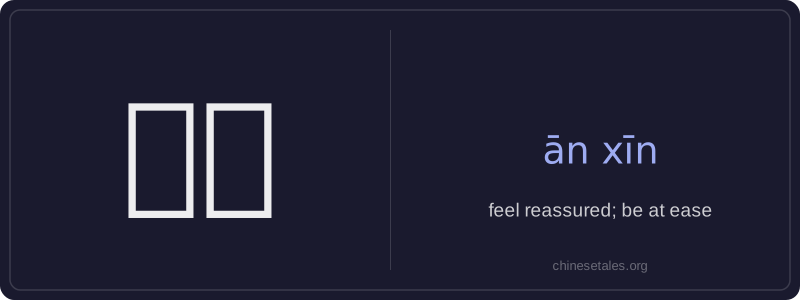
安心 (ān xīn) literally combines 安 (ān), meaning 'peaceful' or 'safe', and 心 (xīn), meaning 'heart' or 'mind'. Together, they express the psychological state of feeling reassured, free from worry, or at ease—literally 'a peaceful heart'. It describes an internal sense of calm that arises when uncertainty or anxiety is resolved, often due to trust in a person, situation, or outcome.
This word is commonly used in interpersonal contexts—such as reassuring someone ('Don’t worry, I’ll handle it—you can安心'), or describing one’s own mental state after receiving good news or seeing things go smoothly. It frequently appears in spoken and written Chinese, especially in caring, supportive, or professional communication (e.g., healthcare, customer service, parenting). While it can function as a verb ('to feel reassured') or an adjective ('reassuring'), its core use centers on emotional relief and mental stability.
Example Sentences
Related Words
背后
背后 literally means 'back + behind' and functions
中学
'Zhōngxué' literally combines 'zhōng' (middle)
见面
见面 literally means 'see face' — combining 见 (t
面条
‘面条’ (miàn tiáo) literally means ‘flour str
我的
我的 (wǒ de) is a possessive pronoun meaning 'my'
不对
不对 (bù duì) literally combines 不 (bù), meani
后来
Later (hòulái) is an adverb meaning 'afterwards'
在家
'Zài jiā' literally combines the preposition 'z