Word Explanation
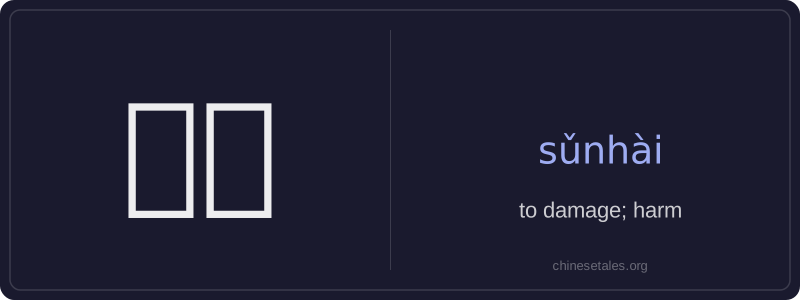
损害 (sǔnhài) is a verb meaning 'to damage' or 'to harm', often implying injury to something valuable—such as health, reputation, property, or rights. The first character 损 (sǔn) means 'to impair' or 'to diminish', while 害 (hài) means 'harm' or 'injury'; together, they form a compound emphasizing intentional or consequential damage. It’s commonly used in formal, legal, medical, or ethical contexts—not for minor, accidental scratches, but for significant, often negative impacts.
This word frequently appears in written Chinese and official speech—for example, in discussions about environmental protection, consumer rights, or public health. It can take objects directly (e.g., 损害健康), and is often paired with words like 造成 (to cause), 防止 (to prevent), or 严重 (severe). While it may occasionally appear as a noun (e.g., 造成损害), its primary and most frequent role is verbal.
Example Sentences
Related Words
背后
背后 literally means 'back + behind' and functions
中学
'Zhōngxué' literally combines 'zhōng' (middle)
见面
见面 literally means 'see face' — combining 见 (t
面条
‘面条’ (miàn tiáo) literally means ‘flour str
我的
我的 (wǒ de) is a possessive pronoun meaning 'my'
不对
不对 (bù duì) literally combines 不 (bù), meani
后来
Later (hòulái) is an adverb meaning 'afterwards'
在家
'Zài jiā' literally combines the preposition 'z