Word Explanation
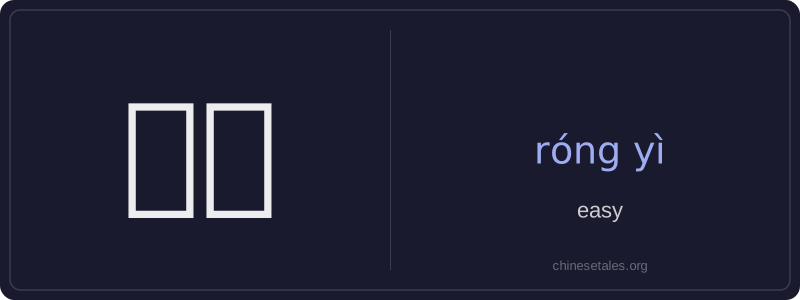
容易 (róng yì) is an adjective meaning 'easy' or 'not difficult', describing something that requires little effort, skill, or time to accomplish. The character 容 (róng) originally meant 'to hold' or 'to accommodate', and in this compound it conveys the sense of 'allowing' or 'being able to'. The character 易 (yì) means 'simple', 'changeable', or 'effortless'—it’s the same character used in the ancient text Yì Jīng (The Book of Changes). Together, 容易 suggests something so simple it can be readily accommodated or handled without strain.
This word is commonly used in everyday speech and writing to describe tasks, learning, understanding, or situations—for example, learning basic Chinese tones is often described as 容易 for beginners with musical training. It frequently appears after the subject and before a verb (e.g., 这个问题很容易回答), or as a predicate adjective (e.g., 这件事很容易). It’s neutral in register—suitable for both casual and formal contexts—but not typically used for people (e.g., don’t say *他很容易* to mean 'he is easy'; use 随和 instead).
Example Sentences
Related Words
背后
背后 literally means 'back + behind' and functions
中学
'Zhōngxué' literally combines 'zhōng' (middle)
见面
见面 literally means 'see face' — combining 见 (t
面条
‘面条’ (miàn tiáo) literally means ‘flour str
我的
我的 (wǒ de) is a possessive pronoun meaning 'my'
不对
不对 (bù duì) literally combines 不 (bù), meani
后来
Later (hòulái) is an adverb meaning 'afterwards'
在家
'Zài jiā' literally combines the preposition 'z