Word Explanation
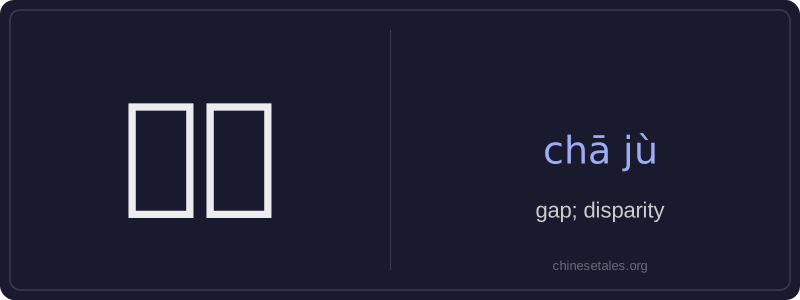
差距 (chā jù) literally combines 差 (chā), meaning 'difference' or 'gap', and 距 (jù), meaning 'distance' or 'separation'. Together, they form a noun that refers to a measurable or perceptible gap—whether in level, quality, ability, income, development, or understanding—between two or more people, groups, or things. It emphasizes inequality or divergence rather than mere physical distance.
This word is commonly used in social, educational, economic, and personal contexts—for example, when comparing academic performance, regional development, or skill levels. It often carries a neutral or slightly evaluative tone, especially when highlighting problems needing attention. Unlike the verb 差 (chà), which means 'to fall short', 差距 is strictly a noun and always appears with modifiers like 'large', 'small', 'narrow', or 'widen'.
Example Sentences
Related Words
背后
背后 literally means 'back + behind' and functions
中学
'Zhōngxué' literally combines 'zhōng' (middle)
见面
见面 literally means 'see face' — combining 见 (t
面条
‘面条’ (miàn tiáo) literally means ‘flour str
我的
我的 (wǒ de) is a possessive pronoun meaning 'my'
不对
不对 (bù duì) literally combines 不 (bù), meani
后来
Later (hòulái) is an adverb meaning 'afterwards'
在家
'Zài jiā' literally combines the preposition 'z