Word Explanation
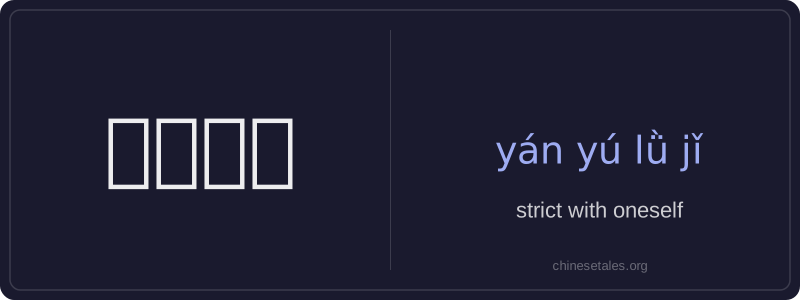
‘严于律己’ literally means ‘strict in regulating oneself’ — it describes someone who holds themselves to high moral, ethical, or behavioral standards, often with self-discipline and personal accountability. The character 严 (yán) means ‘strict’ or ‘serious’; 于 (yú) is a preposition indicating ‘with respect to’ or ‘in regard to’; 律 (lǜ) means ‘to regulate’ or ‘to discipline’; and 己 (jǐ) means ‘oneself’. Together, the phrase emphasizes internal rigor rather than harshness toward others.
This expression is commonly used in formal, educational, or moral discourse — especially when praising integrity, leadership, or personal growth. It frequently appears in speeches, essays on character development, and discussions about professional ethics. While it carries positive connotations of responsibility and humility, it’s not used casually in everyday speech; rather, it reflects an aspirational or evaluative standard for conduct.
Example Sentences
Related Words
背后
背后 literally means 'back + behind' and functions
中学
'Zhōngxué' literally combines 'zhōng' (middle)
见面
见面 literally means 'see face' — combining 见 (t
面条
‘面条’ (miàn tiáo) literally means ‘flour str
我的
我的 (wǒ de) is a possessive pronoun meaning 'my'
不对
不对 (bù duì) literally combines 不 (bù), meani
后来
Later (hòulái) is an adverb meaning 'afterwards'
在家
'Zài jiā' literally combines the preposition 'z