Word Explanation
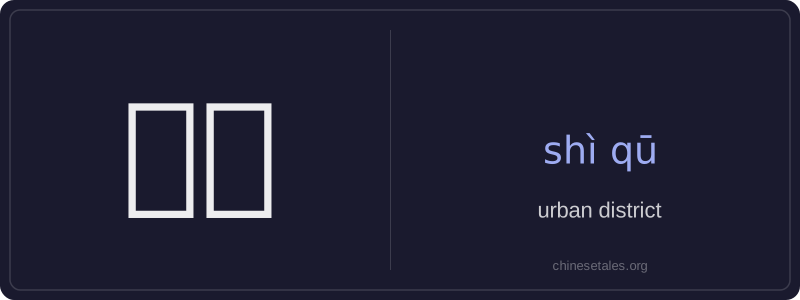
市区 (shì qū) literally combines 市 (shì), meaning 'city' or 'municipality', and 区 (qū), meaning 'district' or 'area'. Together, it refers to the central, built-up, densely populated part of a city — what English speakers often call the 'urban district', 'city center', or 'downtown'. It contrasts with suburbs (郊区, jiāo qū), rural areas (农村, nóng cūn), or satellite towns. The term is commonly used in transportation, real estate, and daily conversation to indicate proximity to core city functions like shopping, government offices, and major infrastructure.
市区 is a neutral, standard term used across mainland China, Taiwan, and other Mandarin-speaking regions. It’s not tied to administrative boundaries (like a formal 'district' under local government), but rather reflects functional and perceptual urban centrality. You’ll see it on bus routes (e.g., 'to the市区'), weather reports ('市区气温'), and housing ads ('near the市区'). While some cities have official districts named 市区, the word is most frequently used generically to mean 'the main city area' as opposed to outlying zones.
Example Sentences
Related Words
背后
背后 literally means 'back + behind' and functions
中学
'Zhōngxué' literally combines 'zhōng' (middle)
见面
见面 literally means 'see face' — combining 见 (t
面条
‘面条’ (miàn tiáo) literally means ‘flour str
我的
我的 (wǒ de) is a possessive pronoun meaning 'my'
不对
不对 (bù duì) literally combines 不 (bù), meani
后来
Later (hòulái) is an adverb meaning 'afterwards'
在家
'Zài jiā' literally combines the preposition 'z