Word Explanation
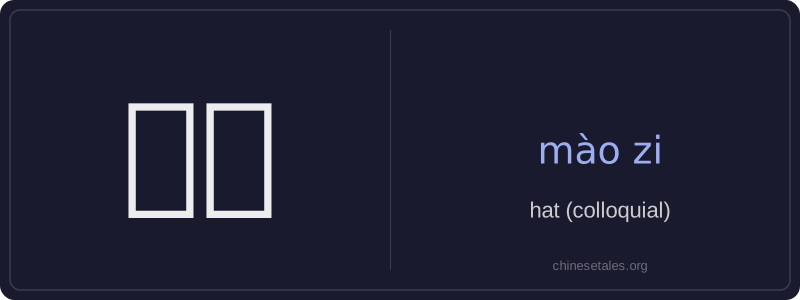
帽子 (mào zi) is a colloquial, general-purpose noun meaning 'hat'—a head covering worn for protection, fashion, or function. The first character 帽 (mào) specifically denotes 'hat' and carries the core semantic meaning; the second character 子 (zi) is a common nominal suffix that adds a diminutive or familiar tone, making the word sound more everyday and less formal than the literary term 帽 (mào) alone. This suffix pattern appears in many Chinese nouns (e.g., 桌子 zhuōzi 'table', 狗子 gǒuzi 'dog', though the latter is slang).
帽子 is used broadly across contexts: baseball caps, sun hats, winter beanies, and even figurative expressions like '戴帽子 (dài màozi)' meaning 'to label someone unfairly'. It does not refer to helmets (头盔 tóukuí) or religious headgear like turbans (头巾 tóujīn), unless specified contextually. Children learn this word early as part of clothing vocabulary, and it frequently appears in instructions ('Put on your hat') or descriptions ('She wore a red hat').
Example Sentences
Related Words
背后
背后 literally means 'back + behind' and functions
中学
'Zhōngxué' literally combines 'zhōng' (middle)
见面
见面 literally means 'see face' — combining 见 (t
面条
‘面条’ (miàn tiáo) literally means ‘flour str
我的
我的 (wǒ de) is a possessive pronoun meaning 'my'
不对
不对 (bù duì) literally combines 不 (bù), meani
后来
Later (hòulái) is an adverb meaning 'afterwards'
在家
'Zài jiā' literally combines the preposition 'z