Word Explanation
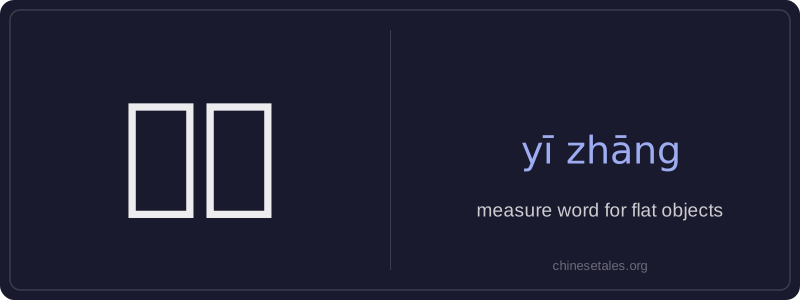
'Yī zhāng' is a numeral-measure word compound used specifically for flat, thin, or sheet-like objects. The first character 'yī' means 'one', and the second character 'zhāng' is a measure word that quantifies items such as paper, tickets, photos, tables, or even maps—objects with a broad surface and relatively low thickness. Unlike general counters like 'gè', 'zhāng' carries inherent semantic information about shape and physical structure.
This measure word is highly productive in daily life: you say 'yī zhāng piào' (a ticket), 'yī zhāng zhào 片' (a photo), or 'yī zhāng zhuōzi' (a table). It cannot be used for round, spherical, or three-dimensional objects without flat surfaces—e.g., you wouldn’t say '*yī zhāng píngguǒ' for 'an apple'. Mastery of 'zhāng' helps learners sound more natural when describing common household or office items, documents, or printed materials.
Example Sentences
Related Words
背后
背后 literally means 'back + behind' and functions
中学
'Zhōngxué' literally combines 'zhōng' (middle)
见面
见面 literally means 'see face' — combining 见 (t
面条
‘面条’ (miàn tiáo) literally means ‘flour str
我的
我的 (wǒ de) is a possessive pronoun meaning 'my'
不对
不对 (bù duì) literally combines 不 (bù), meani
后来
Later (hòulái) is an adverb meaning 'afterwards'
在家
'Zài jiā' literally combines the preposition 'z