Word Explanation
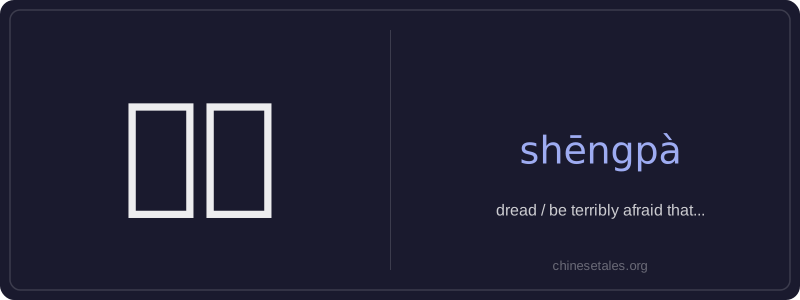
Shēngpà is an adverbial phrase meaning 'dread that...' or 'be terribly afraid that...', used to express intense, often irrational fear about a possible negative outcome. Though it contains the characters shēng (literally 'born' or 'extremely') and pà ('to fear'), together they form an idiomatic expression where shēng intensifies pà — not 'born fear', but rather 'fear so strong it feels innate'. It typically introduces a clause expressing what the speaker is anxious might happen.
This word appears frequently in spoken and written Chinese when describing protective, cautious, or overanxious behavior — for example, a parent worrying their child will get sick, or someone hesitating to speak up for fear of offending. It carries a subtle nuance of emotional vulnerability and sometimes gentle self-mockery. Shēngpà is more literary and expressive than simple pà, and is never used as a standalone predicate verb — it always modifies a following clause beginning with 'that' (often implied, not marked by a conjunction like yǐwéi or kǒngpà).
Example Sentences
Related Words
背后
背后 literally means 'back + behind' and functions
中学
'Zhōngxué' literally combines 'zhōng' (middle)
见面
见面 literally means 'see face' — combining 见 (t
面条
‘面条’ (miàn tiáo) literally means ‘flour str
我的
我的 (wǒ de) is a possessive pronoun meaning 'my'
不对
不对 (bù duì) literally combines 不 (bù), meani
后来
Later (hòulái) is an adverb meaning 'afterwards'
在家
'Zài jiā' literally combines the preposition 'z