Word Explanation
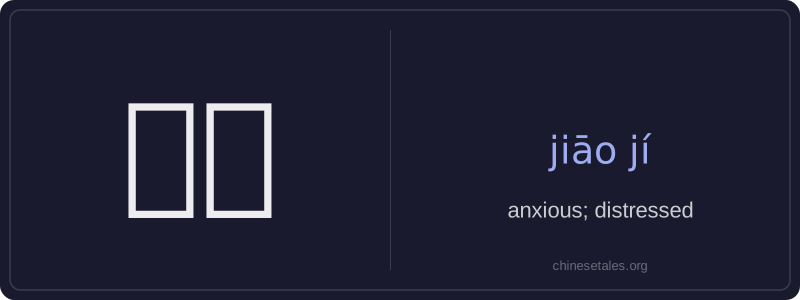
焦急 is an adjective meaning 'anxious' or 'distressed', describing a state of mental unease caused by worry, uncertainty, or impatience—often about something important or urgent. The character 焦 originally means 'scorched' or 'burnt', and metaphorically conveys emotional 'burning' or inner turmoil; 急 means 'urgent' or 'hurried', reinforcing the sense of agitation and restlessness. Together, they form a compound that emphasizes both emotional intensity and time pressure.
This word is commonly used in spoken and written Chinese to describe feelings before receiving news (e.g., exam results), waiting for someone late, or anticipating outcomes with high personal stakes. It carries a slightly stronger, more visceral tone than similar words like 着急—it implies deeper distress, sometimes bordering on helplessness. 焦急 is rarely used attributively without a verb (e.g., not *焦急的心情* without context); it most naturally appears in predicative positions after subjects (e.g., 他很焦急) or as a complement after verbs like 感到, 显得, or 变得.
Example Sentences
Related Words
背后
背后 literally means 'back + behind' and functions
中学
'Zhōngxué' literally combines 'zhōng' (middle)
见面
见面 literally means 'see face' — combining 见 (t
面条
‘面条’ (miàn tiáo) literally means ‘flour str
我的
我的 (wǒ de) is a possessive pronoun meaning 'my'
不对
不对 (bù duì) literally combines 不 (bù), meani
后来
Later (hòulái) is an adverb meaning 'afterwards'
在家
'Zài jiā' literally combines the preposition 'z