Word Explanation
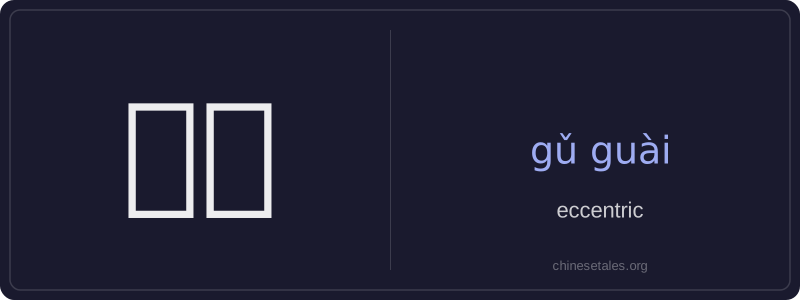
古怪 (gǔ guài) is an adjective meaning 'eccentric', 'bizarre', or 'odd' — describing someone or something that behaves, looks, or feels unusually or unexpectedly different from the norm. The first character 古 (gǔ) literally means 'ancient' and here evokes a sense of old-fashioned, archaic, or out-of-step with modern expectations; the second character 怪 (guài) means 'strange' or 'weird'. Together, they form a compound emphasizing not just strangeness, but a kind of idiosyncratic, slightly unsettling uniqueness — often with neutral or mildly negative connotation, though sometimes affectionate depending on tone and context.
This word commonly describes people’s personalities, habits, or mannerisms (e.g., a reclusive inventor with odd routines), but can also modify objects, ideas, or situations — like a ‘bizarre custom’ or ‘peculiar sound’. It’s more literary and expressive than common alternatives like 奇怪, carrying subtle nuance of enduring, ingrained quirkiness rather than momentary surprise.
Example Sentences
Related Words
背后
背后 literally means 'back + behind' and functions
中学
'Zhōngxué' literally combines 'zhōng' (middle)
见面
见面 literally means 'see face' — combining 见 (t
面条
‘面条’ (miàn tiáo) literally means ‘flour str
我的
我的 (wǒ de) is a possessive pronoun meaning 'my'
不对
不对 (bù duì) literally combines 不 (bù), meani
后来
Later (hòulái) is an adverb meaning 'afterwards'
在家
'Zài jiā' literally combines the preposition 'z