Word Explanation
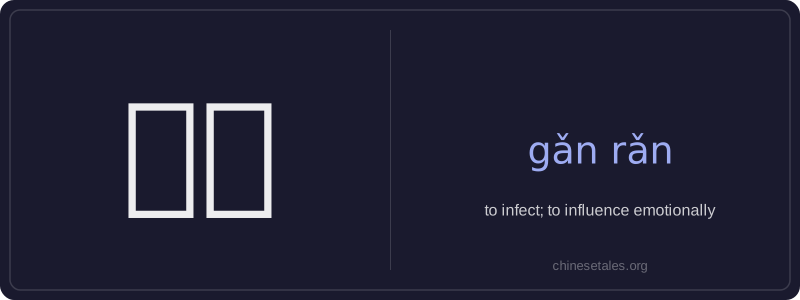
感染 (gǎn rǎn) is primarily a verb meaning 'to infect' in medical contexts—referring to the transmission of pathogens like viruses or bacteria from one person, animal, or surface to another. The character 感 means 'to feel' or 'to be affected by', and 染 means 'to stain' or 'to color', together evoking the idea of something external 'staining' or 'affecting' the body or mind. This dual sense extends metaphorically to emotional influence: when someone's mood, attitude, or enthusiasm spreads to others, we also say they 'infect' those around them.
The word appears frequently in public health discussions (e.g., disease outbreaks), clinical settings, and psychological or social descriptions. It’s transitive—always requiring an object (e.g., 感染病毒, 感染情绪)—and often used with passive constructions (被感染). While it can describe both physical and emotional impact, the medical sense is more common and concrete; the emotional use tends to be literary or expressive, not casual.
Example Sentences
Related Words
背后
背后 literally means 'back + behind' and functions
中学
'Zhōngxué' literally combines 'zhōng' (middle)
见面
见面 literally means 'see face' — combining 见 (t
面条
‘面条’ (miàn tiáo) literally means ‘flour str
我的
我的 (wǒ de) is a possessive pronoun meaning 'my'
不对
不对 (bù duì) literally combines 不 (bù), meani
后来
Later (hòulái) is an adverb meaning 'afterwards'
在家
'Zài jiā' literally combines the preposition 'z