Word Explanation
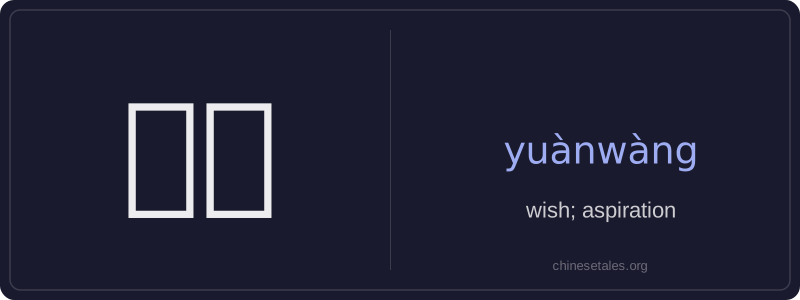
‘愿望’ (yuànwàng) is a compound noun meaning ‘wish’ or ‘aspiration’ — something one deeply hopes to achieve or experience. The first character 愿 (yuàn) means ‘to wish’ or ‘to be willing’, carrying a sense of heartfelt desire and sincerity. The second character 望 (wàng) means ‘to look toward’ or ‘to hope for’, suggesting anticipation and direction toward a future goal. Together, they emphasize a personal, often earnest longing — not just a passing thought, but a meaningful aim rooted in emotion and intention.
This word is commonly used in both everyday and formal contexts: children talk about birthday wishes, students express academic aspirations, and people share life goals in speeches or writing. It’s neutral in register — appropriate for spoken and written Chinese — and frequently appears with modifiers like ‘美好的’ (beautiful), ‘最大的’ (greatest), or ‘实现’ (to fulfill). Unlike the more casual ‘希望’ (xīwàng), ‘愿望’ implies stronger emotional weight and personal significance.
Example Sentences
Related Words
背后
背后 literally means 'back + behind' and functions
中学
'Zhōngxué' literally combines 'zhōng' (middle)
见面
见面 literally means 'see face' — combining 见 (t
面条
‘面条’ (miàn tiáo) literally means ‘flour str
我的
我的 (wǒ de) is a possessive pronoun meaning 'my'
不对
不对 (bù duì) literally combines 不 (bù), meani
后来
Later (hòulái) is an adverb meaning 'afterwards'
在家
'Zài jiā' literally combines the preposition 'z