Word Explanation
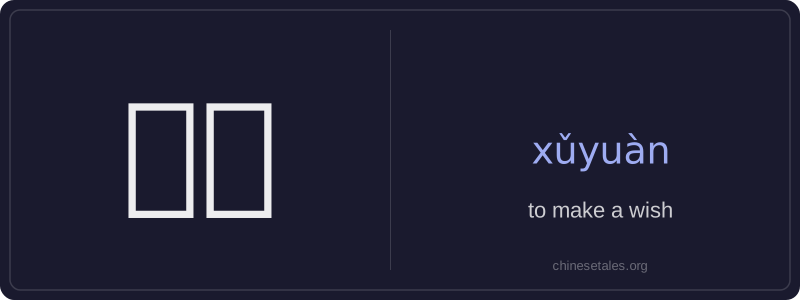
许愿 (xǔyuàn) is a verb meaning 'to make a wish' — typically with the hope or belief that it might come true, often in a ritual or symbolic context. The first character 许 (xǔ) means 'to permit' or 'to grant', and the second 愿 (yuàn) means 'wish' or 'desire'. Together, they literally suggest 'granting one’s own wish' or 'voicing a heartfelt desire', emphasizing intention and sincerity rather than passive hoping.
This word is commonly used in cultural or emotional contexts: blowing out birthday candles, tossing coins into a fountain, visiting temples, or gazing at stars. It carries a gentle, poetic, and slightly reverent tone — not for casual daydreaming, but for moments of focused hope or quiet aspiration. While it can appear in both spoken and written Chinese, it’s more frequent in descriptive or literary language than in highly colloquial speech.
Example Sentences
Related Words
背后
背后 literally means 'back + behind' and functions
中学
'Zhōngxué' literally combines 'zhōng' (middle)
见面
见面 literally means 'see face' — combining 见 (t
面条
‘面条’ (miàn tiáo) literally means ‘flour str
我的
我的 (wǒ de) is a possessive pronoun meaning 'my'
不对
不对 (bù duì) literally combines 不 (bù), meani
后来
Later (hòulái) is an adverb meaning 'afterwards'
在家
'Zài jiā' literally combines the preposition 'z