Word Explanation
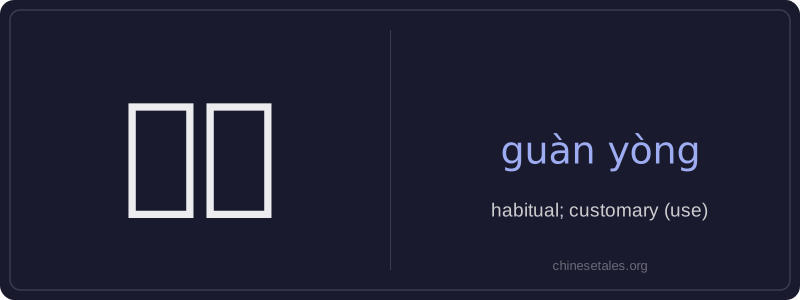
惯用 (guàn yòng) is an adjective meaning 'habitual' or 'customary,' describing something regularly used, practiced, or preferred by a person or group. The first character 惯 (guàn) means 'accustomed to' or 'habitual,' while 用 (yòng) means 'to use' — together they literally convey 'habitually used.' It often modifies nouns like 惯用语 (guànyòngyǔ, 'idiomatic expression'), 惯用手 (guànyòngshǒu, 'dominant hand'), or 惯用词 (guànyòngcí, 'commonly used word').
This term emphasizes repeated, ingrained usage rather than one-time or formal application. It appears frequently in linguistics (e.g., describing fixed phrases), psychology (e.g., habitual behavior), and everyday descriptions of personal routines or preferences. Unlike the verb 习惯 (xíguàn, 'to get used to'), 惯用 functions attributively — it must precede a noun and cannot stand alone as a predicate.
Example Sentences
Related Words
背后
背后 literally means 'back + behind' and functions
中学
'Zhōngxué' literally combines 'zhōng' (middle)
见面
见面 literally means 'see face' — combining 见 (t
面条
‘面条’ (miàn tiáo) literally means ‘flour str
我的
我的 (wǒ de) is a possessive pronoun meaning 'my'
不对
不对 (bù duì) literally combines 不 (bù), meani
后来
Later (hòulái) is an adverb meaning 'afterwards'
在家
'Zài jiā' literally combines the preposition 'z