Word Explanation
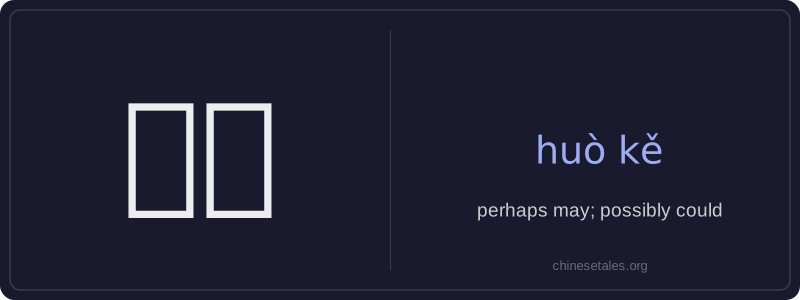
'或可' is a formal, literary adverb meaning 'perhaps may' or 'possibly could'. It combines the character '或' (huò), meaning 'or' or 'perhaps', with '可' (kě), meaning 'can' or 'may'. Together, they express tentative possibility or conditional permission — softer and more cautious than plain '可能' or '也许', and often used in written or elevated spoken contexts like essays, speeches, or polite suggestions.
This phrase typically appears before a verb or adjective to soften a claim or proposal. It carries a tone of humility or scholarly restraint, common in academic writing, policy documents, or diplomatic language. While grammatically correct in speech, it sounds noticeably formal and is rarely used in casual conversation. Learners should note that '或可' does not function as a conjunction — it never means 'or' in the sense of alternatives, despite the presence of '或'.
Example Sentences
Related Words
背后
背后 literally means 'back + behind' and functions
中学
'Zhōngxué' literally combines 'zhōng' (middle)
见面
见面 literally means 'see face' — combining 见 (t
面条
‘面条’ (miàn tiáo) literally means ‘flour str
我的
我的 (wǒ de) is a possessive pronoun meaning 'my'
不对
不对 (bù duì) literally combines 不 (bù), meani
后来
Later (hòulái) is an adverb meaning 'afterwards'
在家
'Zài jiā' literally combines the preposition 'z