Word Explanation
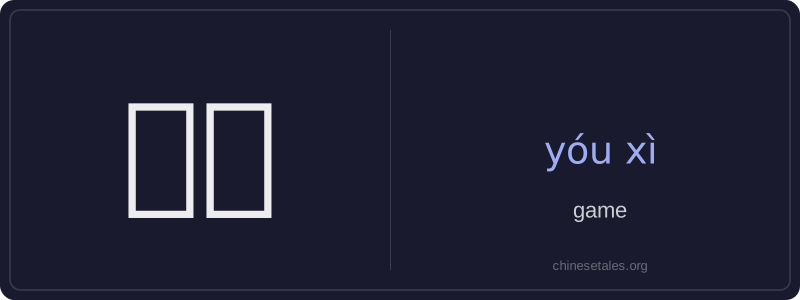
游戏 (yóu xì) means 'game' in Chinese — any structured activity done for fun, competition, or learning, whether physical (like tag), board-based (like chess), or digital (like video games). The character 游 (yóu) originally meant 'to swim' but evolved to convey movement, leisure, and wandering; 戏 (xì) means 'play', 'drama', or 'performance'. Together, they evoke the idea of playful, imaginative engagement — not mere pastime, but intentional, rule-bound recreation. This word is neutral in register and widely used across ages and contexts.
游戏 appears frequently in daily life: children talk about playground games, adults discuss mobile apps, educators design learning games, and psychologists study game-based therapy. It can refer to both the activity itself ('Let’s play a game') and the object or system enabling it ('This board game has simple rules'). Unlike 玩 (wán), which is a verb meaning 'to play' generally, 游戏 is strictly a noun and cannot be used as a verb without additional grammar (e.g., 玩游戏).
Example Sentences
Related Words
背后
背后 literally means 'back + behind' and functions
中学
'Zhōngxué' literally combines 'zhōng' (middle)
见面
见面 literally means 'see face' — combining 见 (t
面条
‘面条’ (miàn tiáo) literally means ‘flour str
我的
我的 (wǒ de) is a possessive pronoun meaning 'my'
不对
不对 (bù duì) literally combines 不 (bù), meani
后来
Later (hòulái) is an adverb meaning 'afterwards'
在家
'Zài jiā' literally combines the preposition 'z