Word Explanation
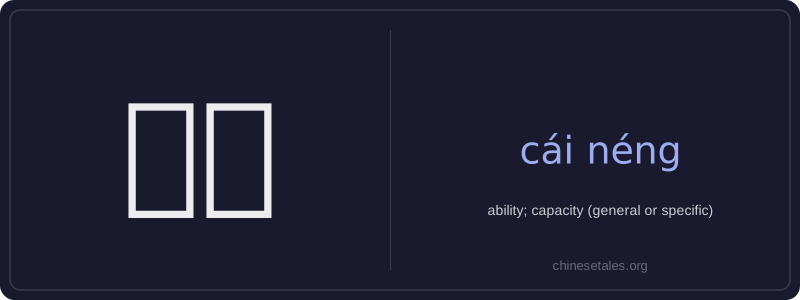
‘才能’ (cái néng) is a noun meaning ‘ability’ or ‘capacity’, referring to someone’s natural aptitude, learned skill, or potential to do something well. It combines 才 (cái), which conveys talent, intelligence, or giftedness, and 能 (néng), meaning ‘can’ or ‘able to’ — together they emphasize an inherent or developed capability rather than just momentary ability. Unlike the verb 能 (néng), which expresses possibility or permission (e.g., 我能去), 才能 always functions as a noun and refers to the underlying capacity itself.
This word is commonly used in contexts involving personal development, education, professional evaluation, or self-reflection — for example, when discussing strengths, career suitability, or nurturing potential. It often appears after possessive pronouns (e.g., 他的才能), quantifiers (e.g., 过人的才能), or in phrases like 发挥才能 (to bring one’s abilities into full play). It carries a slightly formal or appreciative tone and is rarely used for basic physical abilities like walking or seeing.
Example Sentences
Related Words
背后
背后 literally means 'back + behind' and functions
中学
'Zhōngxué' literally combines 'zhōng' (middle)
见面
见面 literally means 'see face' — combining 见 (t
面条
‘面条’ (miàn tiáo) literally means ‘flour str
我的
我的 (wǒ de) is a possessive pronoun meaning 'my'
不对
不对 (bù duì) literally combines 不 (bù), meani
后来
Later (hòulái) is an adverb meaning 'afterwards'
在家
'Zài jiā' literally combines the preposition 'z