Word Explanation
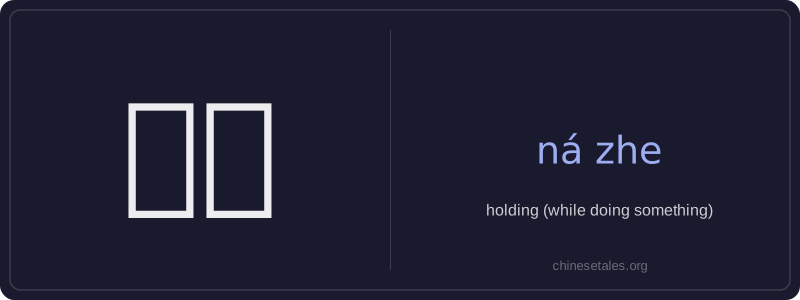
'拿着' (ná zhe) is a verb phrase meaning 'holding (something) in one's hand or arms while doing something else.' It combines the verb 拿 (ná, 'to take, to hold') with the aspect particle 着 (zhe), which indicates a continuous or ongoing state. Unlike the simple verb 拿, 拿着 emphasizes that the object remains in the person’s grasp during another action — for example, walking, talking, or looking. It implies physical contact and sustained possession, not just the moment of picking something up.
This structure is common in everyday spoken and written Chinese, especially when describing simultaneous actions. The object usually comes immediately after 拿着 (e.g., 拿着书, 拿着伞), though it may be omitted if clear from context. It’s neutral in register — appropriate for casual and formal situations alike — and frequently appears in narratives, instructions, and descriptions of people’s appearance or behavior.
Example Sentences
Related Words
背后
背后 literally means 'back + behind' and functions
中学
'Zhōngxué' literally combines 'zhōng' (middle)
见面
见面 literally means 'see face' — combining 见 (t
面条
‘面条’ (miàn tiáo) literally means ‘flour str
我的
我的 (wǒ de) is a possessive pronoun meaning 'my'
不对
不对 (bù duì) literally combines 不 (bù), meani
后来
Later (hòulái) is an adverb meaning 'afterwards'
在家
'Zài jiā' literally combines the preposition 'z