Word Explanation
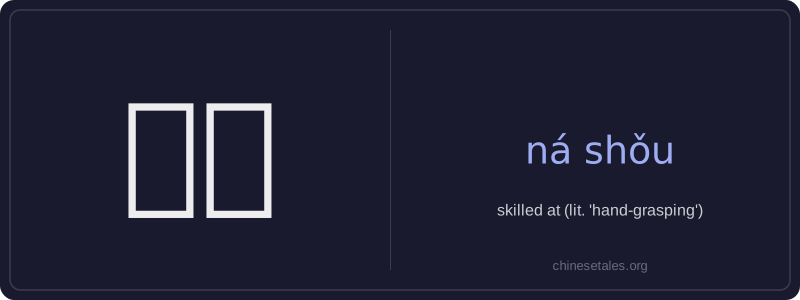
'拿手' (ná shǒu) literally means 'hand-grasping', but functions as an adjective meaning 'skilled at' or 'proficient in' a particular activity — especially one that involves personal ability, practice, or talent. The character 拿 (ná) conveys 'to take' or 'to handle', while 手 (shǒu) means 'hand', together evoking the idea of confidently handling or mastering something with one's hands (and by extension, one's skill). It’s commonly used to describe strengths in practical, creative, or social domains — like cooking, singing, negotiation, or even teasing friends.
This term is informal and conversational, often appearing after the subject and before the noun it modifies (e.g., 他拿手菜是红烧肉), or predicatively with 是 (e.g., 这道题是他拿手的). Unlike formal terms like 擅长 (shàn cháng), 拿手 feels warm, personal, and slightly colloquial — frequently heard in everyday speech, food contexts, and self-introductions.
Example Sentences
Related Words
背后
背后 literally means 'back + behind' and functions
中学
'Zhōngxué' literally combines 'zhōng' (middle)
见面
见面 literally means 'see face' — combining 见 (t
面条
‘面条’ (miàn tiáo) literally means ‘flour str
我的
我的 (wǒ de) is a possessive pronoun meaning 'my'
不对
不对 (bù duì) literally combines 不 (bù), meani
后来
Later (hòulái) is an adverb meaning 'afterwards'
在家
'Zài jiā' literally combines the preposition 'z