Word Explanation
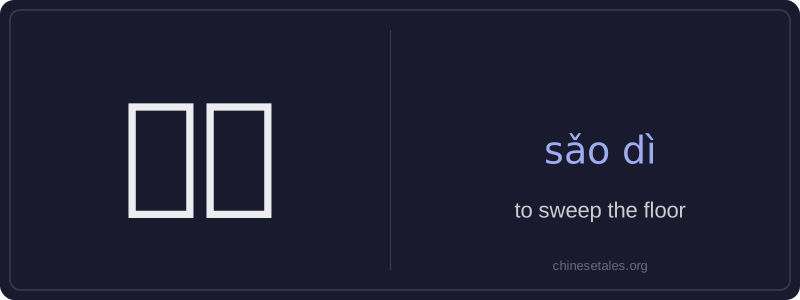
扫地 (sǎo dì) literally means 'to sweep the ground' and functions as a compound verb meaning 'to sweep the floor.' The first character 扫 (sǎo) means 'to sweep' or 'to brush away,' while 地 (dì) means 'ground' or 'floor.' Together, they form a common, everyday action in Chinese households and workplaces. This verb is typically used in contexts involving cleaning, household chores, or maintaining order in shared spaces.
The phrase is often used in simple, transitive sentences — for example, with an object like 'the floor' (地板) or 'the classroom' (教室), though 地 itself can stand in for 'the floor' in casual speech. It's frequently taught early in Chinese language learning because it reflects basic daily routines and combines two high-frequency characters. Unlike English, where 'sweep' may require a preposition ('sweep the floor'), 扫地 functions as a single verbal unit and rarely needs an explicit object when context is clear.
Example Sentences
Related Words
背后
背后 literally means 'back + behind' and functions
中学
'Zhōngxué' literally combines 'zhōng' (middle)
见面
见面 literally means 'see face' — combining 见 (t
面条
‘面条’ (miàn tiáo) literally means ‘flour str
我的
我的 (wǒ de) is a possessive pronoun meaning 'my'
不对
不对 (bù duì) literally combines 不 (bù), meani
后来
Later (hòulái) is an adverb meaning 'afterwards'
在家
'Zài jiā' literally combines the preposition 'z