Word Explanation
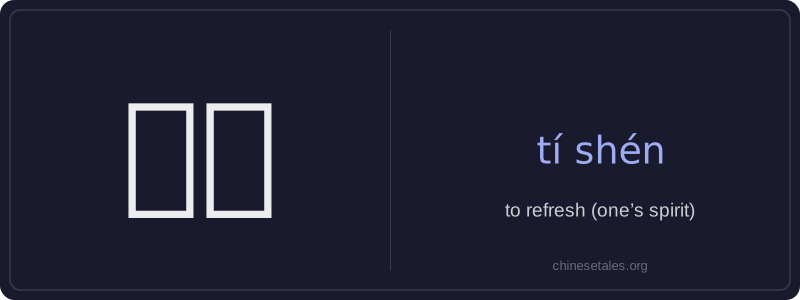
提神 literally means 'to lift (tī) the spirit (shén)' — it describes the action of refreshing one’s mental alertness or energy, especially when feeling tired, drowsy, or mentally sluggish. The character 提 conveys raising or lifting, while 神 refers to spirit, consciousness, or mental vitality — together they evoke the idea of reviving inner energy and focus. This term is commonly used in contexts involving fatigue relief, such as after lunch, during long work hours, or early in the morning.
It functions as a transitive verb and often appears with objects like 咖啡 (coffee), 茶 (tea), or 运动 (exercise), or in structures like ‘喝点咖啡提提神’ (drink some coffee to refresh yourself). While it can be used reflexively, it rarely takes formal passive or causative constructions. It carries a neutral-to-positive register and is widely used in spoken and informal written Chinese — you’ll hear it in offices, classrooms, and homes alike.
Example Sentences
Related Words
背后
背后 literally means 'back + behind' and functions
中学
'Zhōngxué' literally combines 'zhōng' (middle)
见面
见面 literally means 'see face' — combining 见 (t
面条
‘面条’ (miàn tiáo) literally means ‘flour str
我的
我的 (wǒ de) is a possessive pronoun meaning 'my'
不对
不对 (bù duì) literally combines 不 (bù), meani
后来
Later (hòulái) is an adverb meaning 'afterwards'
在家
'Zài jiā' literally combines the preposition 'z