Word Explanation
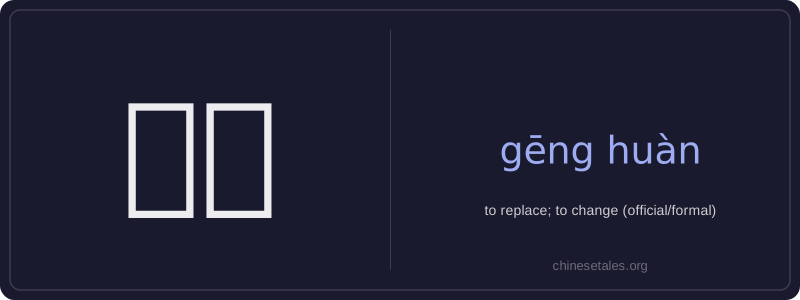
更换 (gēng huàn) is a formal, transitive verb meaning 'to replace' or 'to change' — typically used when substituting one thing for another in an official, technical, or systematic context. The first character 更 (gēng) means 'to change' or 'to renew', often implying an upgrade or update; the second character 换 (huàn) means 'to exchange' or 'to swap'. Together, they emphasize a deliberate, often authorized substitution — such as replacing faulty equipment, updating software, or changing personnel in an organization. It’s more formal and intentional than everyday words like 换 (huàn) alone.
This word is commonly found in written Chinese, official notices, technical manuals, and workplace communication. It rarely appears in casual speech, where simpler alternatives like 换 (huàn) or 改 (gǎi) are preferred. The object of 更换 is usually concrete and specific — e.g., a part, a document, a staff member — and the action implies completion or implementation, not just intention.
Example Sentences
Related Words
背后
背后 literally means 'back + behind' and functions
中学
'Zhōngxué' literally combines 'zhōng' (middle)
见面
见面 literally means 'see face' — combining 见 (t
面条
‘面条’ (miàn tiáo) literally means ‘flour str
我的
我的 (wǒ de) is a possessive pronoun meaning 'my'
不对
不对 (bù duì) literally combines 不 (bù), meani
后来
Later (hòulái) is an adverb meaning 'afterwards'
在家
'Zài jiā' literally combines the preposition 'z