Word Explanation
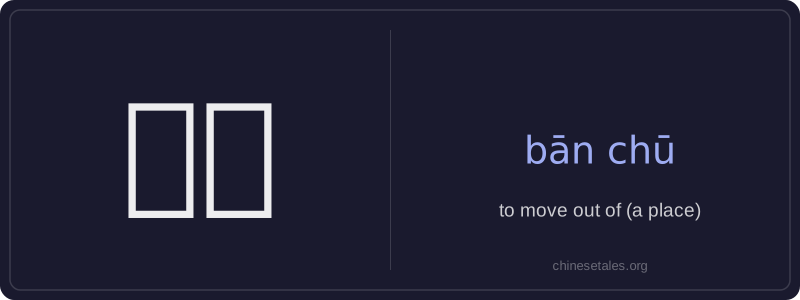
搬出 (bān chū) is a separable verb meaning 'to move out of' a residence, room, or other physical location. It combines the verb 搬 (bān), meaning 'to carry, to move (objects or oneself)', with the directional complement 出 (chū), meaning 'out (of)'. Together, they express the action of physically relocating oneself and one’s belongings from an enclosed or defined space — most commonly an apartment, house, dormitory, or office. The word emphasizes departure from a specific, previously occupied location.
This verb is used in everyday spoken and written Mandarin, especially when discussing housing changes, life transitions, or logistical arrangements. It often appears in contexts involving leases, family dynamics, or personal independence — for example, after graduation, marriage, or a breakup. Unlike generic verbs like 离开 (to leave), 搬出 specifically implies removal of possessions and cessation of residence, not just temporary departure.
Example Sentences
Related Words
背后
背后 literally means 'back + behind' and functions
中学
'Zhōngxué' literally combines 'zhōng' (middle)
见面
见面 literally means 'see face' — combining 见 (t
面条
‘面条’ (miàn tiáo) literally means ‘flour str
我的
我的 (wǒ de) is a possessive pronoun meaning 'my'
不对
不对 (bù duì) literally combines 不 (bù), meani
后来
Later (hòulái) is an adverb meaning 'afterwards'
在家
'Zài jiā' literally combines the preposition 'z