Word Explanation
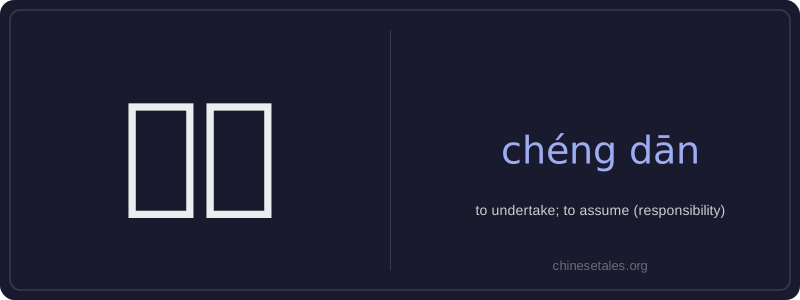
承担 (chéng dān) is a compound verb meaning 'to undertake' or 'to assume (responsibility, obligation, or burden).' The first character 承 (chéng) means 'to receive,' 'to accept,' or 'to inherit,' while the second character 担 (dān) means 'to carry on one's shoulders' — together, they convey the idea of willingly accepting and bearing a responsibility, often something serious or weighty. It emphasizes commitment and accountability, not just passive involvement.
This word is commonly used in formal, written, or professional contexts — such as legal documents, workplace discussions, academic writing, or public speeches — rather than casual conversation. It frequently appears with nouns like 责任 (zérèn, 'responsibility'), 义务 (yìwù, 'duty'), 风险 (fēngxiǎn, 'risk'), or 后果 (hòuguǒ, 'consequences'). While it can be used reflexively (e.g., 自己承担), it is rarely used with objects that are purely physical or trivial; its semantic core is moral or institutional duty.
Example Sentences
Related Words
背后
背后 literally means 'back + behind' and functions
中学
'Zhōngxué' literally combines 'zhōng' (middle)
见面
见面 literally means 'see face' — combining 见 (t
面条
‘面条’ (miàn tiáo) literally means ‘flour str
我的
我的 (wǒ de) is a possessive pronoun meaning 'my'
不对
不对 (bù duì) literally combines 不 (bù), meani
后来
Later (hòulái) is an adverb meaning 'afterwards'
在家
'Zài jiā' literally combines the preposition 'z