Word Explanation
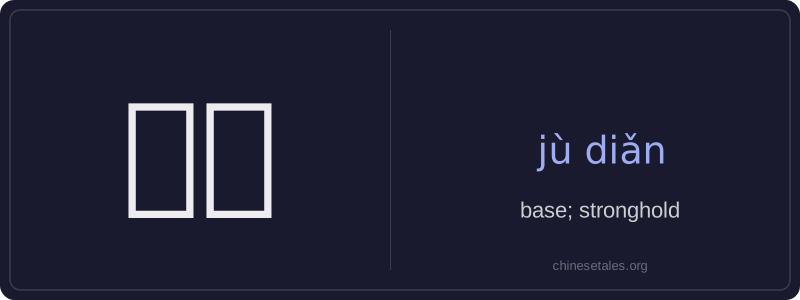
‘据点’ (jù diǎn) literally combines 据 (jù), meaning 'to occupy' or 'to hold', and 点 (diǎn), meaning 'point' or 'spot'. Together, it refers to a strategically occupied location—typically a military base, operational hub, or fortified position used for control, defense, or launching activities. Historically, it often appears in contexts of warfare, resistance, or territorial control, such as enemy strongholds during wartime.
In modern usage, ‘据点’ extends metaphorically to any central, influential location serving a specific function—e.g., a company’s regional office, a research team’s field station, or even a popular café that serves as a regular meeting spot for a social group. While neutral in grammar, it carries connotations of purposeful occupation and functional centrality—not just any location, but one actively used as an operational anchor. It is more formal and evocative than generic terms like ‘地方’ (dìfāng, ‘place’) or ‘地点’ (dìdiǎn, ‘location’).
Example Sentences
Related Words
背后
背后 literally means 'back + behind' and functions
中学
'Zhōngxué' literally combines 'zhōng' (middle)
见面
见面 literally means 'see face' — combining 见 (t
面条
‘面条’ (miàn tiáo) literally means ‘flour str
我的
我的 (wǒ de) is a possessive pronoun meaning 'my'
不对
不对 (bù duì) literally combines 不 (bù), meani
后来
Later (hòulái) is an adverb meaning 'afterwards'
在家
'Zài jiā' literally combines the preposition 'z