Word Explanation
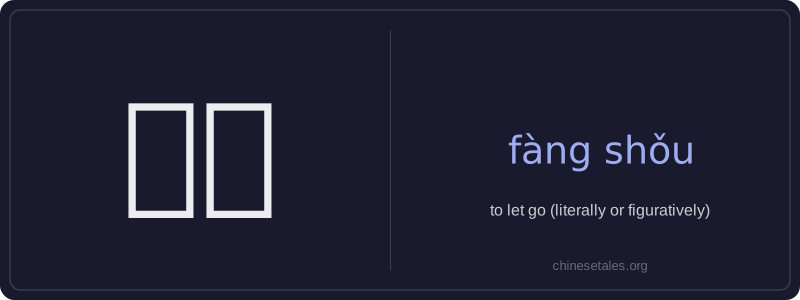
‘Fàng shǒu’ literally means 'to release the hand' — combining 放 (fàng, 'to put; to release') and 手 (shǒu, 'hand'). While it can describe a physical action like letting go of someone’s hand or an object, it is far more commonly used figuratively. In this sense, it expresses releasing control, stepping back from responsibility, or accepting that something must end or proceed without intervention — often with emotional weight, such as ending a relationship, relinquishing authority, or accepting loss.
The phrase carries connotations of maturity, resignation, or wisdom — not passive neglect, but a conscious, sometimes painful, decision to stop holding on. It appears frequently in advice, literature, and everyday speech when discussing relationships, parenting, career transitions, or personal growth. Because of its emotional resonance, it’s rarely used in casual, lighthearted contexts — tone and context strongly shape its interpretation.
Example Sentences
Related Words
背后
背后 literally means 'back + behind' and functions
中学
'Zhōngxué' literally combines 'zhōng' (middle)
见面
见面 literally means 'see face' — combining 见 (t
面条
‘面条’ (miàn tiáo) literally means ‘flour str
我的
我的 (wǒ de) is a possessive pronoun meaning 'my'
不对
不对 (bù duì) literally combines 不 (bù), meani
后来
Later (hòulái) is an adverb meaning 'afterwards'
在家
'Zài jiā' literally combines the preposition 'z