Word Explanation
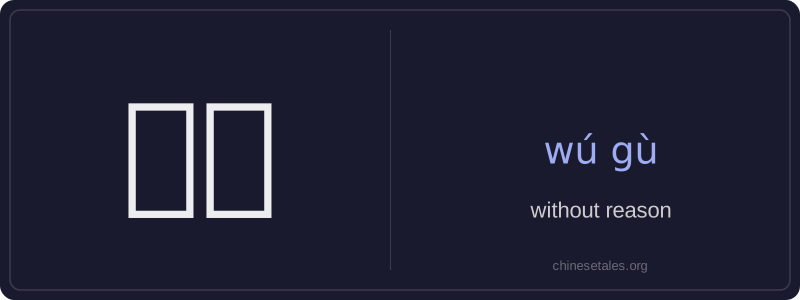
'Wú gù' literally means 'without reason' or 'without cause'. The character 无 (wú) means 'not' or 'without', and 故 (gù) means 'reason', 'cause', or 'ground'. Together, they form an adverbial phrase that emphasizes the lack of justification or logical basis for an action, event, or state. It is commonly used in formal or written Chinese—such as official notices, news reports, or academic writing—to express disapproval or to highlight unwarranted behavior.
This phrase often appears in contexts involving rules, discipline, or social expectations—for example, when describing someone’s unexcused absence, sudden departure, or arbitrary decision-making. While it can occasionally appear in spoken language, it carries a slightly stern or critical tone, so learners should avoid using it casually among friends. It frequently modifies verbs (e.g., 离开, 缺席, 解雇) and is typically placed before the verb it modifies.
Example Sentences
Related Words
背后
背后 literally means 'back + behind' and functions
中学
'Zhōngxué' literally combines 'zhōng' (middle)
见面
见面 literally means 'see face' — combining 见 (t
面条
‘面条’ (miàn tiáo) literally means ‘flour str
我的
我的 (wǒ de) is a possessive pronoun meaning 'my'
不对
不对 (bù duì) literally combines 不 (bù), meani
后来
Later (hòulái) is an adverb meaning 'afterwards'
在家
'Zài jiā' literally combines the preposition 'z