Word Explanation
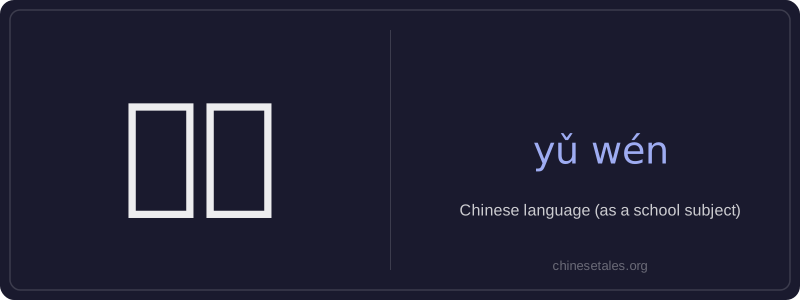
语文 (yǔ wén) literally means 'language and literature'—'语' refers to spoken language, speech, and communication, while '文' means writing, characters, and literary texts. Together, they form the official name for the Chinese language subject taught in schools across China and many Chinese-speaking regions. Unlike 'Chinese' as a general term (e.g., 中文 zhōngwén), 语文 emphasizes the integrated study of reading, writing, grammar, classical poetry, modern essays, and oral expression—all within the national curriculum.
This subject is foundational in Chinese education, beginning in elementary school and continuing through high school. It focuses not only on linguistic competence but also on cultural literacy, moral education, and critical thinking through canonical texts. Students take regular 语文 exams, complete 语文 homework, and may join 语文 interest groups. The word is rarely used outside educational contexts—never to refer to the Chinese language in linguistics, translation, or casual conversation about speaking Chinese.
Example Sentences
Related Words
背后
背后 literally means 'back + behind' and functions
中学
'Zhōngxué' literally combines 'zhōng' (middle)
见面
见面 literally means 'see face' — combining 见 (t
面条
‘面条’ (miàn tiáo) literally means ‘flour str
我的
我的 (wǒ de) is a possessive pronoun meaning 'my'
不对
不对 (bù duì) literally combines 不 (bù), meani
后来
Later (hòulái) is an adverb meaning 'afterwards'
在家
'Zài jiā' literally combines the preposition 'z