Word Explanation
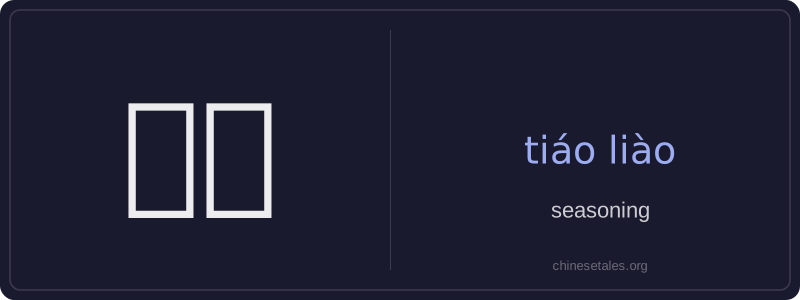
‘调料’ (tiáo liào) literally combines ‘调’ (tiáo), meaning ‘to adjust’ or ‘to blend’, and ‘料’ (liào), meaning ‘ingredient’ or ‘material’. Together, they refer to substances added to food to enhance flavor, aroma, or appearance — such as salt, soy sauce, sugar, pepper, or chili oil. Unlike main ingredients, seasonings are used in small amounts primarily for taste modulation.
This word is commonly used in cooking contexts, grocery shopping, recipe instructions, and restaurant ordering. It’s a collective noun — usually uncountable in Chinese — and rarely appears in plural form. While many seasonings are plant-based (e.g., ginger, star anise), the term itself is neutral and functional, focusing on culinary purpose rather than origin. It’s widely understood across all Mandarin-speaking regions and appropriate for both casual and formal settings.
Example Sentences
Related Words
背后
背后 literally means 'back + behind' and functions
中学
'Zhōngxué' literally combines 'zhōng' (middle)
见面
见面 literally means 'see face' — combining 见 (t
面条
‘面条’ (miàn tiáo) literally means ‘flour str
我的
我的 (wǒ de) is a possessive pronoun meaning 'my'
不对
不对 (bù duì) literally combines 不 (bù), meani
后来
Later (hòulái) is an adverb meaning 'afterwards'
在家
'Zài jiā' literally combines the preposition 'z