Word Explanation
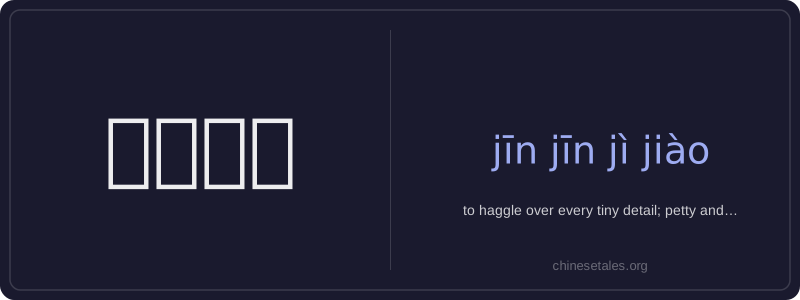
‘斤斤计较’ is an idiomatic adjective describing someone who obsessively haggles over trivial matters—every small detail, cost, or perceived slight—often revealing pettiness, lack of generosity, or excessive self-interest. Literally, ‘斤’ (jīn) is a traditional Chinese unit of weight (≈500g), and its repetition emphasizes meticulous, almost obsessive measurement; ‘计’ means ‘to calculate’ and ‘较’ means ‘to compare’ or ‘to contend’. Together, the phrase evokes the image of someone weighing each tiny thing on a scale, refusing to let anything go unexamined or uncompensated.
This expression carries a distinctly negative connotation and is commonly used in social, workplace, or family contexts to criticize overly rigid, stingy, or unforgiving behavior—especially when it undermines harmony or goodwill. It’s rarely used neutrally or positively; instead, it signals disapproval of disproportionate attention to minor issues at the expense of bigger values like trust, kindness, or perspective.
Example Sentences
Related Words
背后
背后 literally means 'back + behind' and functions
中学
'Zhōngxué' literally combines 'zhōng' (middle)
见面
见面 literally means 'see face' — combining 见 (t
面条
‘面条’ (miàn tiáo) literally means ‘flour str
我的
我的 (wǒ de) is a possessive pronoun meaning 'my'
不对
不对 (bù duì) literally combines 不 (bù), meani
后来
Later (hòulái) is an adverb meaning 'afterwards'
在家
'Zài jiā' literally combines the preposition 'z