Word Explanation
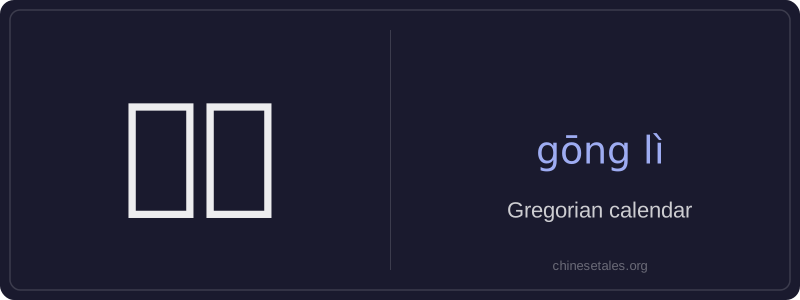
‘公历’ (gōng lì) literally means ‘public calendar’ — ‘公’ (gōng) conveys ‘public,’ ‘official,’ or ‘standard,’ while ‘历’ (lì) means ‘calendar’ or ‘almanac.’ Together, they refer specifically to the Gregorian calendar, the internationally accepted civil calendar introduced by Pope Gregory XIII in 1582 and now used in China for official, business, and daily life purposes. It contrasts with traditional Chinese lunar calendars (农历, nóng lì) used for festivals and agricultural timing.
In modern China, all government documents, school schedules, contracts, and digital devices default to 公历 unless otherwise specified. While people may consult the lunar calendar for holidays like Spring Festival or Mid-Autumn Festival, dates on IDs, passports, invoices, and news reports are always given in 公历. The term emphasizes standardization and cross-cultural compatibility, reflecting China’s integration into global timekeeping systems since the early 20th century.
Example Sentences
Related Words
背后
背后 literally means 'back + behind' and functions
中学
'Zhōngxué' literally combines 'zhōng' (middle)
见面
见面 literally means 'see face' — combining 见 (t
面条
‘面条’ (miàn tiáo) literally means ‘flour str
我的
我的 (wǒ de) is a possessive pronoun meaning 'my'
不对
不对 (bù duì) literally combines 不 (bù), meani
后来
Later (hòulái) is an adverb meaning 'afterwards'
在家
'Zài jiā' literally combines the preposition 'z