Word Explanation
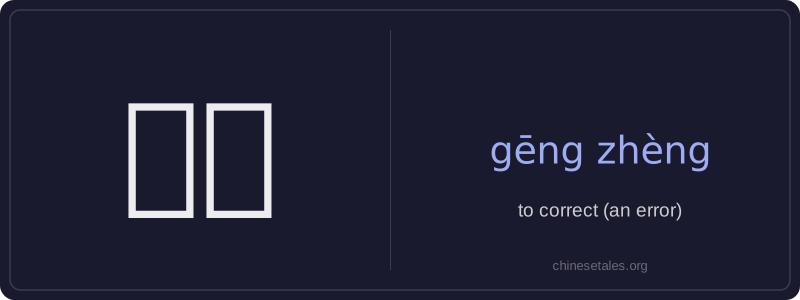
更正 means 'to correct (an error)' and is a formal, standard verb used when fixing mistakes in writing, speech, data, or official information. The character 更 (gēng) means 'to change' or 'to replace', while 正 (zhèng) means 'correct' or 'right'; together, they convey the idea of replacing something incorrect with the right version. It’s commonly used in academic, professional, and administrative contexts — for example, correcting typos in documents, updating inaccurate records, or issuing public corrections.
This verb often appears in compound structures like 更正错误 (gēngzhèng cuòwù, 'correct a mistake') or 要求更正 (yāoqiú gēngzhèng, 'request a correction'). Unlike the more casual 改正 (gǎizhèng), 更正 tends to imply a higher degree of formality and authority — it’s frequently seen in news reports, official notices, and editorial statements. It can be used transitively (e.g., 更正信息) or intransitively (e.g., 请予以更正).
Example Sentences
Related Words
背后
背后 literally means 'back + behind' and functions
中学
'Zhōngxué' literally combines 'zhōng' (middle)
见面
见面 literally means 'see face' — combining 见 (t
面条
‘面条’ (miàn tiáo) literally means ‘flour str
我的
我的 (wǒ de) is a possessive pronoun meaning 'my'
不对
不对 (bù duì) literally combines 不 (bù), meani
后来
Later (hòulái) is an adverb meaning 'afterwards'
在家
'Zài jiā' literally combines the preposition 'z