Word Explanation
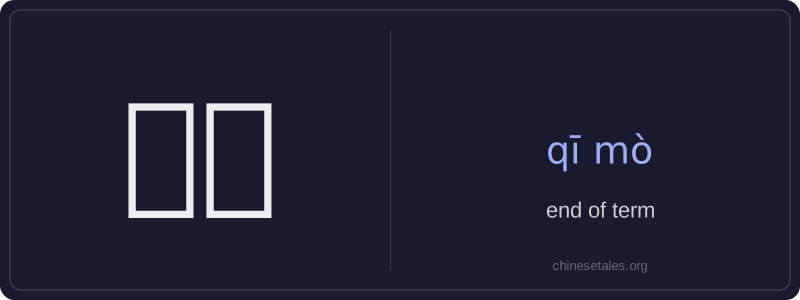
'期末' (qī mò) literally combines '期' (qī), meaning 'term' or 'period', and '末' (mò), meaning 'end' or 'close'. Together, they form a compound noun meaning 'end of term' — specifically referring to the final stage of an academic term, typically when final exams, grade assessments, and course wrap-ups occur.
This word is commonly used in educational contexts across China, Taiwan, and other Mandarin-speaking regions. It appears in phrases like '期末考试' (end-of-term exam), '期末成绩' (end-of-term grades), and '期末复习' (end-of-term review). Unlike general time expressions such as '年底' (end of year), '期末' is narrowly tied to formal schooling cycles — semesters or academic terms — and is rarely used outside education or administrative school settings.
Example Sentences
Related Words
背后
背后 literally means 'back + behind' and functions
中学
'Zhōngxué' literally combines 'zhōng' (middle)
见面
见面 literally means 'see face' — combining 见 (t
面条
‘面条’ (miàn tiáo) literally means ‘flour str
我的
我的 (wǒ de) is a possessive pronoun meaning 'my'
不对
不对 (bù duì) literally combines 不 (bù), meani
后来
Later (hòulái) is an adverb meaning 'afterwards'
在家
'Zài jiā' literally combines the preposition 'z