Word Explanation
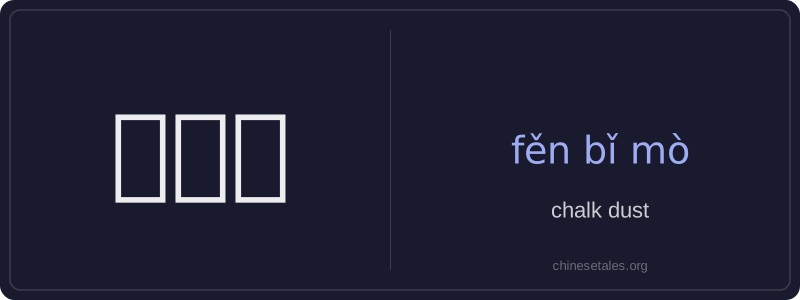
粉笔末 (fěn bǐ mò) literally means 'chalk powder' or 'chalk dust' — the fine, powdery residue left behind when chalk is used on a blackboard. The word breaks down into three characters: 粉 (fěn), meaning 'powder' or 'fine particles'; 笔 (bǐ), meaning 'writing instrument' (here specifying 'chalk', as in 粉笔 fěn bǐ); and 末 (mò), meaning 'end', 'tip', or 'residue' — together implying the tiny particles that break off from the tip of the chalk during writing. It’s a concrete, countable noun commonly encountered in classrooms, offices with traditional boards, or art settings.
This term carries a neutral, slightly technical tone — not slang, but also not formal or literary. It often appears in descriptive or observational contexts, especially when referring to physical traces (e.g., dust on clothes, surfaces, or in the air). Unlike generic terms like 灰尘 (huī chén, 'dust'), 粉笔末 specifically denotes the chalk-derived variety, making it precise and context-bound.
Example Sentences
Related Words
背后
背后 literally means 'back + behind' and functions
中学
'Zhōngxué' literally combines 'zhōng' (middle)
见面
见面 literally means 'see face' — combining 见 (t
面条
‘面条’ (miàn tiáo) literally means ‘flour str
我的
我的 (wǒ de) is a possessive pronoun meaning 'my'
不对
不对 (bù duì) literally combines 不 (bù), meani
后来
Later (hòulái) is an adverb meaning 'afterwards'
在家
'Zài jiā' literally combines the preposition 'z