Word Explanation
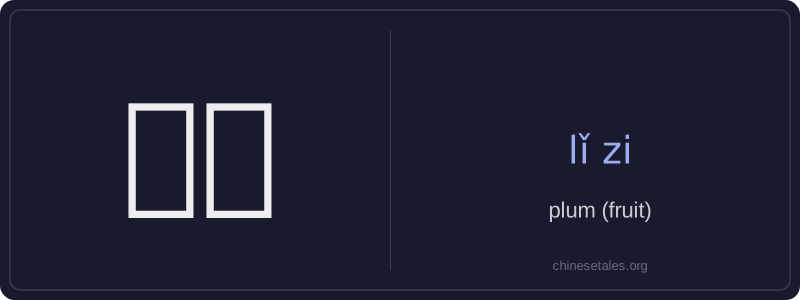
‘李子’ (lǐ zi) is a common noun referring to the edible fruit of the plum tree — a small, round or oval drupe with smooth skin, usually red, purple, yellow, or green, and a single hard pit inside. The character 李 (lǐ) originally denoted a specific type of plum tree and later became a common surname; in this compound, it carries the core meaning of ‘plum’. The suffix 子 (zi) is a nominalizing particle often used to form concrete nouns for fruits, objects, or small things — here, it specifies the fruit itself rather than the tree or variety.
This word is used broadly in everyday speech and writing to refer to fresh, dried, or processed plums. It appears frequently in contexts like grocery shopping, cooking (e.g., plum jam), seasonal descriptions (e.g., summer fruit), and traditional Chinese medicine, where plums are valued for their sour taste and digestive properties. Unlike more technical terms like 欧洲李 (European plum) or 日本李 (Japanese plum), ‘李子’ is the general, colloquial term understood across all Mandarin-speaking regions.
Example Sentences
Related Words
背后
背后 literally means 'back + behind' and functions
中学
'Zhōngxué' literally combines 'zhōng' (middle)
见面
见面 literally means 'see face' — combining 见 (t
面条
‘面条’ (miàn tiáo) literally means ‘flour str
我的
我的 (wǒ de) is a possessive pronoun meaning 'my'
不对
不对 (bù duì) literally combines 不 (bù), meani
后来
Later (hòulái) is an adverb meaning 'afterwards'
在家
'Zài jiā' literally combines the preposition 'z