Word Explanation
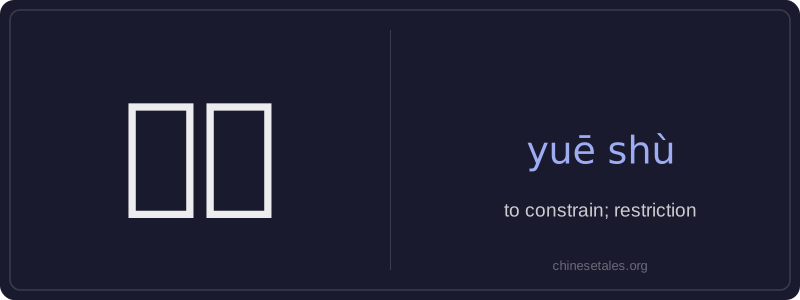
约束 (yuē shù) literally combines 约 (to bind, agree, or limit) and 束 (to tie up or restrain), forming a word that means 'constraint' or 'restriction' as a noun, and 'to constrain' or 'to restrict' as a verb. It conveys the idea of imposing limits—whether by rules, agreements, laws, or natural conditions—to control behavior or prevent excess.
This word is commonly used in formal, academic, or technical contexts—for example, discussing legal limits, ethical boundaries, ecological carrying capacity, or behavioral guidelines. In animal-related contexts, it often refers to natural or human-imposed limits on movement, population growth, or resource use (e.g., habitat constraints for wildlife). Unlike colloquial terms like 限制 (xiànzhì), 约束 carries a stronger sense of obligation, mutual agreement, or systemic limitation rather than mere prohibition.
Example Sentences
Related Words
背后
背后 literally means 'back + behind' and functions
不对
不对 (bù duì) literally combines 不 (bù), meani
中学
'Zhōngxué' literally combines 'zhōng' (middle)
见面
见面 literally means 'see face' — combining 见 (t
面条
‘面条’ (miàn tiáo) literally means ‘flour str
我的
我的 (wǒ de) is a possessive pronoun meaning 'my'
后来
Later (hòulái) is an adverb meaning 'afterwards'
在家
'Zài jiā' literally combines the preposition 'z