Word Explanation
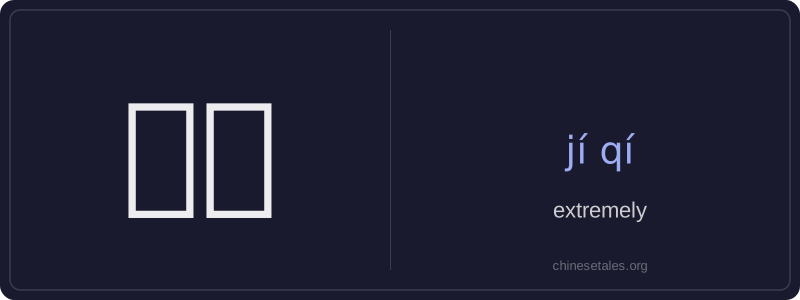
极其 is an adverb meaning 'extremely' or 'to an extraordinary degree'. It intensifies adjectives, verbs, or other adverbs—similar to English words like 'incredibly', 'exceptionally', or 'profoundly'. Though composed of two characters—极 (jí), meaning 'utmost' or 'extreme', and 其 (qí), a classical pronoun often used here as a grammatical intensifier—the phrase functions as a single unit and cannot be separated in modern usage.
This word carries a formal or literary tone and is common in written Chinese, news reports, academic writing, and formal speech. It’s stronger than very (很) and more emphatic than quite (相当) or fairly (比较). While it can modify many parts of speech, it never stands alone as a subject or object; it always modifies something else. Learners should note that it’s not used in casual spoken Chinese as frequently as superlatives like 特别 or 非常.
Example Sentences
Related Words
背后
背后 literally means 'back + behind' and functions
不对
不对 (bù duì) literally combines 不 (bù), meani
中学
'Zhōngxué' literally combines 'zhōng' (middle)
见面
见面 literally means 'see face' — combining 见 (t
面条
‘面条’ (miàn tiáo) literally means ‘flour str
我的
我的 (wǒ de) is a possessive pronoun meaning 'my'
后来
Later (hòulái) is an adverb meaning 'afterwards'
在家
'Zài jiā' literally combines the preposition 'z