Word Explanation
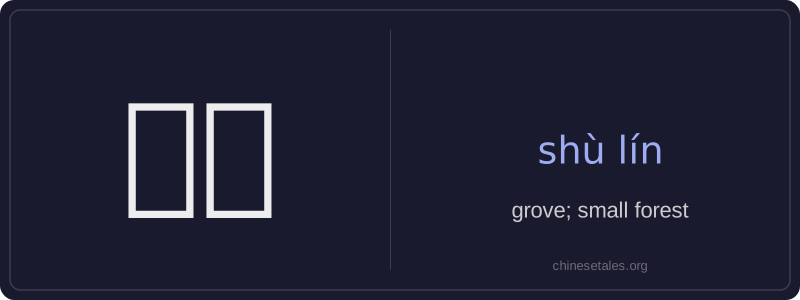
树林 (shù lín) literally combines 树 (shù), meaning 'tree', and 林 (lín), meaning 'grove' or 'forest'. Together, they refer to a small, dense cluster of trees—larger than a single tree or a few scattered ones, but smaller and less extensive than a full forest (森林, sēn lín). It evokes a natural, often quiet and shaded setting, commonly found in rural landscapes, parks, or along hiking trails.
The word is neutral in register and frequently used in descriptive writing, storytelling, and everyday speech when referring to wooded areas that are accessible and intimate in scale. Unlike 森林, which suggests vastness and wilderness, 树林 feels gentler and more approachable—think of a local woods where children play or birds nest. It’s countable (e.g., 一片树林, yī piàn shù lín — 'a patch of grove'), and often modified by measure words like 片 (piàn) or 座 (zuò).
Example Sentences
Related Words
背后
背后 literally means 'back + behind' and functions
不对
不对 (bù duì) literally combines 不 (bù), meani
中学
'Zhōngxué' literally combines 'zhōng' (middle)
见面
见面 literally means 'see face' — combining 见 (t
面条
‘面条’ (miàn tiáo) literally means ‘flour str
我的
我的 (wǒ de) is a possessive pronoun meaning 'my'
后来
Later (hòulái) is an adverb meaning 'afterwards'
在家
'Zài jiā' literally combines the preposition 'z