Word Explanation
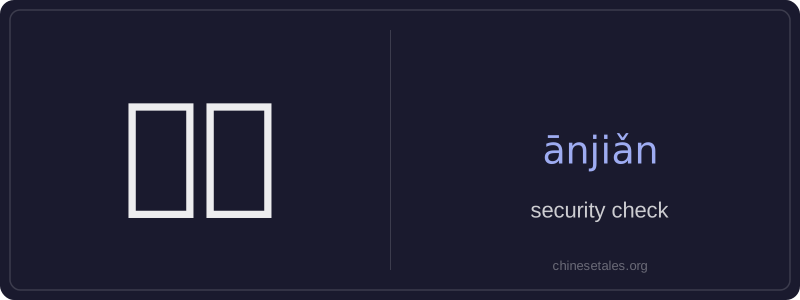
安检 is a compound noun meaning 'security check' — the process of inspecting people, bags, or vehicles to prevent threats like weapons or explosives. It combines 安 (ān), meaning 'safe' or 'security', and 检 (jiǎn), meaning 'to inspect' or 'to examine'. Together, they literally mean 'safety inspection'. This term is used almost exclusively in formal, institutional contexts involving public safety.
You’ll encounter 安检 routinely at airports, train stations, subway entrances, government buildings, and large event venues in China. It typically involves X-ray scanners for luggage, metal detectors or handheld wands for people, and sometimes facial recognition or document verification. While the concept exists worldwide, the word 安检 itself is standard Mandarin terminology and rarely appears in casual speech — it’s functional, official vocabulary tied to infrastructure and regulation.
Example Sentences
Related Words
背后
背后 literally means 'back + behind' and functions
不对
不对 (bù duì) literally combines 不 (bù), meani
中学
'Zhōngxué' literally combines 'zhōng' (middle)
见面
见面 literally means 'see face' — combining 见 (t
面条
‘面条’ (miàn tiáo) literally means ‘flour str
我的
我的 (wǒ de) is a possessive pronoun meaning 'my'
后来
Later (hòulái) is an adverb meaning 'afterwards'
在家
'Zài jiā' literally combines the preposition 'z